
Beyond the Neon: A Guide to Nashville’s Defining Cultural and Historical Landmarks
Long before the neon lights of Broadway began drawing weekend crowds, Nashville earned the moniker “The Athens of the South.” This title was born out of a deep 19th-century dedication to higher education, classical architecture, and a complex agricultural economy that shaped the state of Tennessee. To truly understand the fabric of the Music City, you must step away from the entertainment district and explore the physical spaces where this history unfolded.
The city’s historical landscape is both grand and complicated. It features full-scale replicas of ancient Greek temples alongside sprawling antebellum estates that are actively recontextualizing their pasts to tell the full, unvarnished story of the enslaved individuals who built them. This itinerary rounds up five essential cultural institutions that provide a thorough, multidimensional look at the events, people, and architectural ambitions that built modern-day Nashville.
🏛️ The Parthenon

| Type | Historical Landmark & Art Museum |
|---|---|
| Location | |
| Hours | Mon–Sat: 9am–4:30pm; Sun: 12:30pm–4:30pm |
| Price / Fee | $10 Adults; $8 Youth/Seniors |
| Phone | (615) 862-8431 |
| Website | nashvilleparthenon.com |
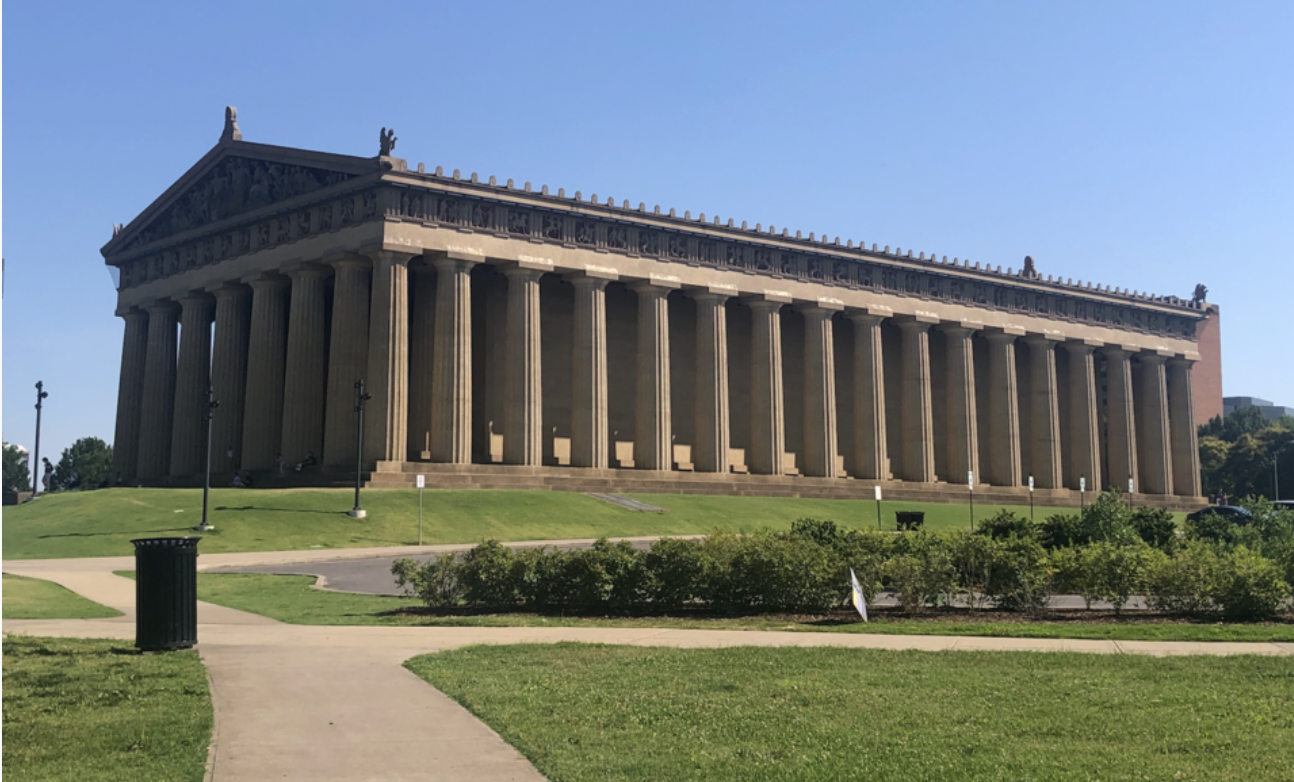
Standing in the center of the 132-acre Centennial Park, the Nashville Parthenon is the world’s only exact-size, full-scale replica of the ancient Athenian temple. It was originally constructed in 1897 using plaster, wood, and brick as the centerpiece for the Tennessee Centennial Exposition. The temporary structure was so beloved by residents that the city decided to permanently rebuild it in cast concrete starting in 1920, firmly cementing Nashville’s reputation as the “Athens of the South.”
The exterior architecture is stunning, featuring 46 massive Doric columns and precise replicas of the original pediment marbles, directly cast from the fragments held in the British Museum. However, the true jaw-dropper is housed inside: a towering, 42-foot-tall statue of the goddess Athena. Unveiled in 1990 and gilded in 2002 with over eight pounds of 23.75-karat gold leaf, she holds a life-sized statue of Nike (Victory) in her right hand. The sheer scale of the interior room forces visitors to crane their necks, providing a genuine sense of the awe ancient Greeks might have felt.
Beyond the impressive statuary, the lower level of the Parthenon functions as a highly respected art museum. It houses the permanent Cowan Collection of 63 paintings by 19th- and 20th-century American artists, as well as rotating gallery spaces. Parking around Centennial Park is completely free, though spots directly next to the structure fill up quickly on sunny weekend afternoons when locals flock to the surrounding green space for picnics and festivals.
Differentiating Detail: It is the only place in the world where you can stand inside an architecturally accurate, full-scale recreation of the ancient Greek Parthenon, complete with the monumental Athena statue.
Best for: Architecture enthusiasts, art lovers, and families looking for a visually striking monument combined with accessible park space.
Who might want to skip it: Travelers strictly looking for Tennessee-specific Civil War or political history.
🐎 Belle Meade Historic Site & Winery

| Type | Historic Estate, Museum & Winery |
|---|---|
| Location | |
| Hours | Daily: 9am–5pm |
| Price / Fee | $28–$35+ depending on tour type |
| Phone | (615) 356-0501 |
| Website | visitbellemeade.com |
Located about seven miles southwest of downtown in one of Nashville’s wealthiest modern neighborhoods, Belle Meade Historic Site traces its origins to a simple log cabin built in 1807. Over the decades, the Harding family expanded the property into a massive 5,400-acre plantation that became world-renowned for breeding premier thoroughbred racehorses. At its peak, the estate was home to Iroquois, the first American-bred horse to win the English Derby, and its bloodlines are famously connected to legendary champions like Secretariat and Seabiscuit.
Today, the site operates with a dual focus. The traditional “Mansion Tour” highlights the Greek Revival architecture, the wealth of the Harding-Jackson family, and the equestrian history. However, the site has drawn well-deserved praise for its specialized “Journey to Jubilee” tour. This intensely researched experience shifts the narrative entirely, focusing solely on the lives, struggles, and post-emancipation successes of the enslaved men and women who were the actual workforce behind the estate’s massive wealth. It is a vital, sobering addition to the property’s programming.
A visit to Belle Meade is capped off with a complimentary wine tasting at their on-site winery, which produces traditional Southern muscadine and blackberry wines alongside standard varietals. The grounds also feature an on-site restaurant and an expansive gift shop. Parking is free and plentiful in their dedicated lots. Given the popularity of the site for private events and bus tours, booking your specific guided tour in advance online is strongly recommended.
Differentiating Detail: It seamlessly intertwines elite American thoroughbred racing history with a critically acclaimed, dedicated tour detailing the African American experience on the estate.
Best for: History buffs looking for comprehensive, nuanced storytelling and visitors who appreciate a relaxed stroll through immaculately preserved 19th-century grounds.
Who might want to skip it: Travelers on a tight budget, as admission and specialty tours are on the higher end for local museums.
🌳 Andrew Jackson’s Hermitage

| Type | Presidential Home & Estate |
|---|---|
| Location | |
| Hours | Daily: 9am–5pm (Last ticket sold at 4pm) |
| Price / Fee | $20–$27 for grounds and mansion tour |
| Phone | (615) 889-2941 |
| Website | thehermitage.com |
Situated about 10 miles east of downtown Nashville, The Hermitage is the meticulously preserved home of Andrew Jackson, the seventh President of the United States. Jackson purchased the property in 1804, and the current Greek Revival mansion was completed in the 1830s after a fire severely damaged the original structure. Today, it stands as one of the most accurately preserved early presidential homes in the country, boasting an impressive collection of original family furnishings, wallpaper, and personal artifacts belonging to Jackson and his wife, Rachel.
The footprint of the estate is massive, covering 1,120 acres. Visitors begin in the modern visitor center, which features an excellent introductory film and museum exhibits outlining Jackson’s complex legacy—from his military victories at the Battle of New Orleans to his highly controversial role in the Indian Removal Act. A short walk leads to the mansion itself, where costumed interpreters guide you through the rooms. The estate also houses the formal garden where Andrew and Rachel Jackson are entombed.
Like Belle Meade, The Hermitage has undertaken significant archaeological and historical efforts to document the lives of the enslaved people who lived and worked there. The “In Their Footsteps” audio tour and the preserved field quarters provide insight into the daily realities of slavery on a major cotton plantation. Because the site is so expansive, visitors should allocate a minimum of three hours to fully walk the grounds, explore the museum, and tour the mansion. There is ample free parking on-site.
Differentiating Detail: It is the official, authentically preserved home of a U.S. President, retaining an unusually high percentage of its original interior furnishings and personal artifacts.
Best for: Presidential history enthusiasts and those willing to spend a half-day exploring a massive, sprawling estate.
Who might want to skip it: Visitors without a rental car or rideshare budget, as it is located significantly outside the primary downtown transit loops.
📜 Tennessee State Museum

| Type | State History Museum |
|---|---|
| Location | |
| Hours | Tue–Sat: 10am–5pm; Sun: 1pm–5pm; Mon: Closed |
| Price / Fee | Free admission |
| Phone | (615) 741-2692 |
| Website | tnmuseum.org |
Opened in a stunning, purpose-built facility in 2018, the Tennessee State Museum is arguably one of the best free educational institutions in the American South. Located at the northern end of the Bicentennial Capitol Mall State Park, the 137,000-square-foot facility offers a chronological journey through the entirety of the state’s history. The museum’s layout is designed as a “Time Tunnel,” guiding visitors linearly from the region’s geological formation and First Peoples through to modern-day cultural achievements.
The collection is vast and incredibly detailed. Standout exhibits include an extensive collection of Native American pottery and artifacts, a thorough and unvarnished examination of Tennessee’s role as a major battleground during the Civil War, and a massive interactive map of the state. The museum also dives heavily into the state’s musical heritage, showcasing everything from early Appalachian folk instruments to the flashy stage costumes of modern country and rock stars.
Because admission is completely free, it is an excellent option for large families or travelers looking for an indoor activity during Nashville’s frequent summer thunderstorms or sweltering heat waves. The museum operates a dedicated, free visitor parking lot directly adjacent to the building—a rare luxury in central Nashville. After touring the exhibits, walking the length of the adjacent Bicentennial Mall offers spectacular views of the State Capitol building.
Differentiating Detail: It offers the most comprehensive, chronological overview of the entire state’s history in a state-of-the-art facility, and admission is entirely free.
Best for: Budget-conscious travelers, families with children, and anyone looking to understand the broader context of Tennessee beyond just Nashville.
Who might want to skip it: Travelers on a very tight schedule who only have time to hit specific, single-focus historical landmarks.
⚜️ Belmont Mansion
| Type | Historic House Museum |
|---|---|
| Location | |
| Hours | Mon–Sat: 10am–3:30pm; Sun: 11am–3:30pm |
| Price / Fee | $18 Adults; $8 Youth |
| Phone | (615) 460-5459 |
| Website | belmontmansion.com |
Nestled right in the middle of the modern, bustling Belmont University campus, the Belmont Mansion stands as the largest house museum in Tennessee. Built in 1853 as a summer home for Adelicia Acklen—one of the wealthiest women in the antebellum South—the Italianate villa was originally surrounded by elaborate gardens, an art gallery, a bowling alley, and even a private zoo. Adelicia’s shrewd business acumen allowed her to navigate the Civil War by secretly selling her Louisiana cotton to British buyers, successfully protecting her immense fortune while the rest of the region suffered financial ruin.
The interior of the mansion reflects Victorian opulence at its absolute peak. The grand salon features intricate plasterwork, massive gilded mirrors, and an impressive collection of 19th-century marble statues that Adelicia purchased during her extensive travels through Europe. The restoration efforts here are meticulous, often relying on historical receipts and letters to recreate the wallpaper and draperies exactly as they appeared in the 1850s and 1860s.
Taking a guided tour provides fascinating insights into Adelicia’s unconventional independence and wealth during an era when women had very few legal rights. Because the mansion is located on a university campus, navigating to the specific visitor parking lot can be slightly confusing for first-timers; be sure to follow the signs for “Belmont Mansion Parking” rather than general student parking. The tour generally takes about an hour, making it an easy addition to an afternoon exploring the nearby 12 South or Hillsboro Village neighborhoods.
Differentiating Detail: Focuses heavily on the biography and unprecedented financial success of Adelicia Acklen, offering a unique perspective on female wealth and power in the 19th-century South.
Best for: Admirers of Victorian decorative arts, antique furnishings, and stories of unconventional historical figures.
Who might want to skip it: Visitors looking for expansive outdoor hiking grounds, as the original estate acreage is now largely occupied by university buildings.
🗓 Best Time / Tips
✅ When to go
- Early Mornings (9:00 AM): The Hermitage and Belle Meade involve significant outdoor walking. During the summer, completing the grounds tours before the midday heat sets in is crucial.
- Weekdays: Tuesday through Thursday are ideal for the Tennessee State Museum and The Parthenon, as you avoid the heavy influx of local school groups and weekend family crowds.
- Spring (April–May): This is arguably the most beautiful time to visit the historical estates, as the massive magnolias and formal gardens are in full bloom.
⚠️ Quick tips
- Combine Locations: The Parthenon and the Belmont Mansion are relatively close to each other geographically. You can easily do both in one day, separated by a lunch stop in the nearby West End or Hillsboro Village neighborhoods.
- Listen to the Audio: At estates like The Hermitage, the audio guides provide essential context regarding the enslaved populations. Do not skip these, as they offer the most comprehensive view of the property’s history.
- Dress Comfortably: If you plan to visit The Hermitage or Belle Meade, wear comfortable walking shoes. The pathways between the outer buildings and the main houses are often gravel or uneven brick.
- Take Advantage of Free Parking: Unlike downtown Nashville, most of these historical sites (The Parthenon, State Museum, Hermitage) offer their own free, dedicated parking lots.
Frequently Asked Questions
Are the historic mansions wheelchair and stroller accessible?
The modern visitor centers and paved pathways at places like The Hermitage and Belle Meade are fully accessible. However, because the historic mansions themselves pre-date modern building codes, access to the upper floors often requires climbing stairs. Always check the specific site’s accessibility page before arriving.
Can I take photographs inside the museums?
Photography without a flash is generally permitted inside The Parthenon and the Tennessee State Museum. However, historic house museums like Belmont Mansion and the interior of The Hermitage often restrict indoor photography to protect light-sensitive artifacts and keep tour groups moving.
Do I need to buy tickets in advance?
While the Tennessee State Museum is free and you can walk right in, it is highly recommended to buy tickets for Belle Meade and The Hermitage online in advance. Specialized tours (like the “Journey to Jubilee” or “Mansion Tour”) frequently sell out on weekends.
How much time should I allocate for each site?
Plan for 1 to 1.5 hours at The Parthenon and Belmont Mansion. The Tennessee State Museum requires about 2 to 3 hours to see everything. The Hermitage and Belle Meade are half-day excursions; plan for 3 to 4 hours to fully experience the grounds and tours without rushing.
Leave a Reply