
The West Side Pivot: A One-Day High Line to Hudson River Itinerary
The West Side of Manhattan has undergone a profound transformation over the last two decades, evolving from a gritty industrial corridor into a premier destination for modern architecture and urban landscape design. This itinerary, “The West Side Pivot,” focuses on the seamless transition between the elevated High Line park and the revamped waterfront of Hudson River Park. It is designed for travelers who appreciate the intersection of contemporary art, adaptive reuse, and innovative public spaces.
Starting in the historic Meatpacking District and concluding at the shimmering glass towers of Hudson Yards, this route offers a chronological flow that maximizes daylight for outdoor views and places you at the highest outdoor sky deck in the Western Hemisphere just in time for sunset. Most movements in this plan are handled on foot via the High Line, allowing for a car-free experience that bypasses Manhattan’s notorious street-level congestion while providing a unique perspective on the city’s private backyards and architectural details.
🎨 Whitney Museum of American Art

| Type | Art Museum |
|---|---|
| Location | |
| Hours | Mon-Sun 10:30 AM – 6:00 PM (Fri until 10 PM) |
| Price / Fee | $30 Adult; Free for 25 & under |
| Phone | (212) 570-3600 |
| Website | whitney.org |
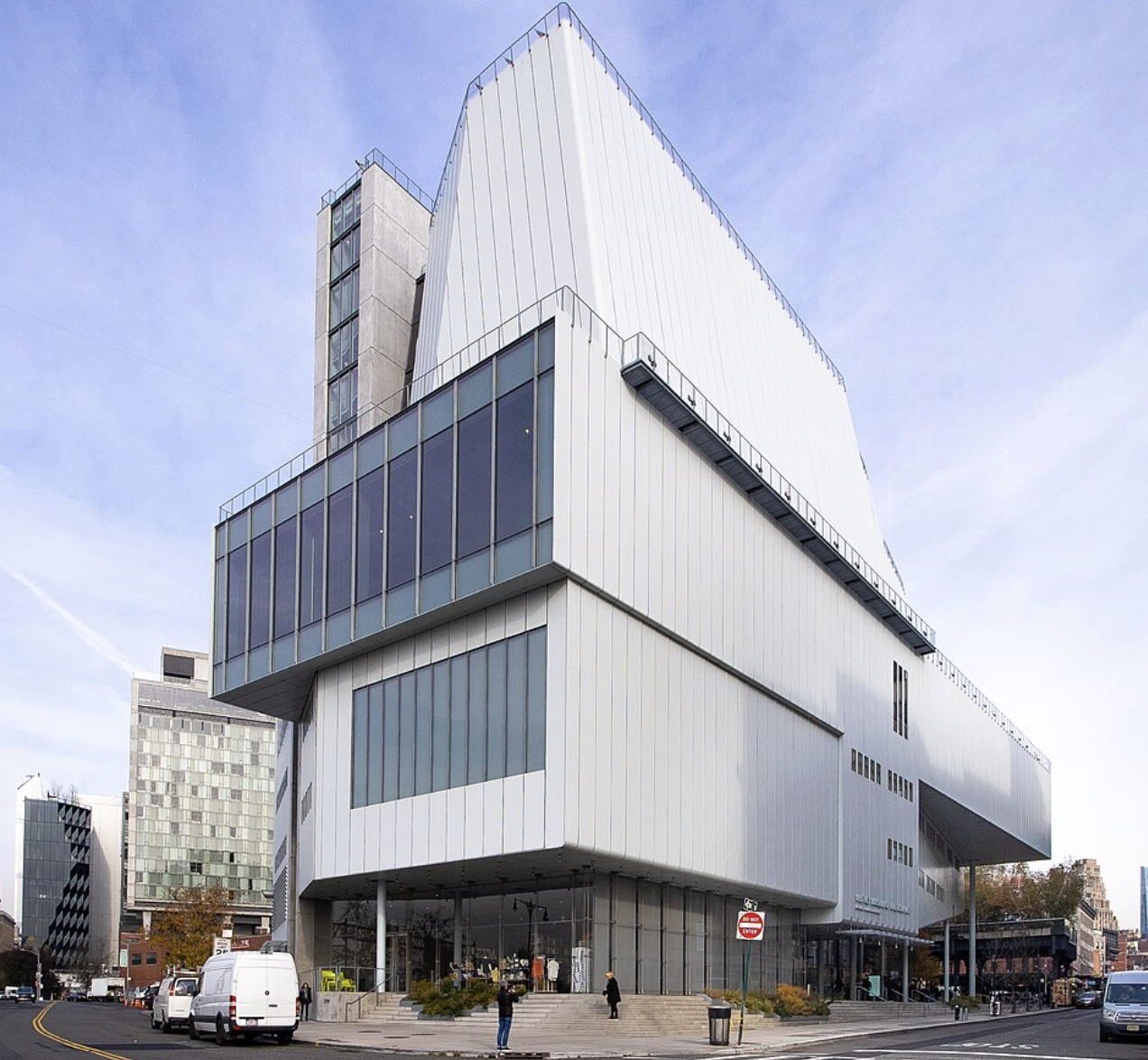
Begin your morning at the southern terminus of the High Line at the Whitney Museum of American Art. Designed by Pritzker Prize-winning architect Renzo Piano, this 2015 building is a masterpiece of asymmetrical steel and glass that reflects the industrial heritage of the Meatpacking District. The museum holds a staggering collection of 20th and 21st-century American art, focusing heavily on living artists. Unlike the Met or MoMA, the Whitney feels deeply connected to the present, often showcasing provocative and timely installations through its flagship Whitney Biennial.
One of the most defining features of the building is its series of cascading outdoor terraces. These serve as exterior galleries, where large-scale sculptures are set against the backdrop of the New York City skyline and the Hudson River. As you move from the top floor downward, make sure to step outside at every level; the views transition from the open river to the dense, jagged rooftops of Lower Manhattan. The natural light flooding the internal galleries through floor-to-ceiling windows makes even the briefest visit feel expansive.
For the most efficient visit, start on the top floor and use the stairs to descend through the permanent collections. The Frenchette Bakery on the ground floor offers high-quality pastries and coffee if you need a quick fuel-up before starting your walk. Locally specific insight: Visitors aged 25 and under receive free admission every day, and the museum offers a “Pay-What-You-Wish” program on Friday evenings from 5:00 PM to 10:00 PM, making it one of the most accessible major cultural institutions in the city.
Movement Note: To continue the itinerary, take the elevator or stairs located immediately outside the museum entrance up to the Gansevoort Street entrance of the High Line. The walk to the next stop takes approximately 5–7 minutes.
Best for: Contemporary art lovers and architecture buffs who enjoy expansive skyline views.
🌿 The High Line

| Type | Public Elevated Park |
|---|---|
| Location | |
| Hours | Daily 7:00 AM – 10:00 PM (Spring/Fall) |
| Price / Fee | Free |
| Phone | (212) 206-9922 |
| Website | thehighline.org |
The High Line is a 1.45-mile-long elevated linear park built on a defunct section of the New York Central Railroad. Once slated for demolition, the track was saved by community activists and reimagined by the design team of James Corner Field Operations, Diller Scofidio + Renfro, and planting designer Piet Oudolf. The park is a masterclass in “agri-tecture,” where the concrete pathways bleed into native wild-plant beds, mimicking the natural overgrowth that occurred during the decades the tracks sat abandoned.
As you walk north from Gansevoort Street, you will pass through several distinct “rooms” or sections. The Diller-von Furstenberg Sundeck at 14th Street features lounge chairs on wheels that sit on the original tracks, while the 10th Avenue Square offers a grandstand-style seating area that looks directly down onto the traffic of 10th Avenue through a massive glass frame. The park is also a rotating outdoor museum; keep an eye out for The Plinth at 30th Street, which hosts monumental contemporary sculptures that change every 18 months.
While the High Line can become extremely crowded on weekends, a midday weekday walk allows you to appreciate the subtle horticultural details and the architectural dialogue with surrounding buildings, such as Zaha Hadid’s 520 West 28th Street. Locally specific insight: Look for the “Chelsea Thicket” between 21st and 22nd Streets, where the path narrows and the vegetation becomes much denser, providing a rare moment of enclosure and quiet in the middle of the city. Access to the street level is available via stairs or elevators at roughly every two to three blocks.
Movement Note: To transition to lunch, exit the High Line at the 16th Street stairs or elevator. Chelsea Market is located just half a block East on 15th or 16th Street.
Best for: Urban explorers, photographers, and those who want a scenic, pedestrian-only route through Manhattan.
🥯 Chelsea Market
| Type | Food Hall & Marketplace |
|---|---|
| Location | |
| Hours | Mon-Sun 7:00 AM – 10:00 PM |
| Price / Fee | Free Entry |
| Phone | (212) 652-2110 |
| Website | chelseamarket.com |
Chelsea Market occupies the former National Biscuit Company (Nabisco) complex, the very site where the Oreo cookie was invented in 1912. Today, the industrial brick corridors have been preserved to house one of the world’s most successful indoor food halls. The market serves as a culinary “pivot” in this itinerary, offering everything from high-end seafood at The Lobster Place to the cult-favorite tacos at Los Tacos No. 1. The interior retains its rugged charm with exposed pipes, weathered brickwork, and artistic light installations.
Beyond the food, the market is a hub for retail and culture. The Artists & Fleas section at the 10th Avenue side features a curated selection of local makers, vintage collectors, and independent designers. For those looking for more than a quick bite, the lower level (Chelsea Local) houses a full-service grocery, a cheesemonger, and an Italian specialty shop. The mix of office workers from the tech companies above (like Google) and international tourists creates a kinetic energy that is uniquely New York.
Navigating the market during peak lunch hours can be overwhelming due to the narrow corridors and long lines at popular stalls. Locally specific insight: If you find the main hall too crowded, head to the 10th Avenue entrance area; it is generally quieter and offers easier access to the artisan shops. Also, don’t miss Pearl River Mart for a deep dive into eclectic Asian home goods and snacks. Most vendors here do not accept reservations, so be prepared to eat standing up or find a spot at the communal counters.
Movement Note: After lunch, exit Chelsea Market at 10th Avenue and walk two blocks West toward the river. Cross the West Side Highway at 13th Street to reach Little Island. The walk takes about 8 minutes.
Best for: Foodies and shoppers who enjoy a bustling, historic indoor environment.
🏝️ Little Island

| Type | Public Floating Park |
|---|---|
| Location | |
| Hours | Daily 6:00 AM – 12:00 AM |
| Price / Fee | Free |
| Phone | (212) 417-2000 |
| Website | littleisland.org |
Rising from the Hudson River on 132 giant concrete “tulips,” Little Island is a 2.4-acre public park that feels like a surrealist escape from the city grid. Designed by Heatherwick Studio, the park replaced the old Pier 54, which was the historic arrival point for Carpathia, the ship that rescued survivors of the Titanic. The varying heights of the concrete piles create a rolling topography that includes dramatic overlooks, hidden paths, and several distinct ecosystems of trees and perennials.
The park is designed as a venue for the arts as much as it is a green space. It features The Amph, a 687-seat amphitheater with stunning river views, and The Glade, a more intimate performance space. Throughout the summer months, you can often find free pop-up performances ranging from tap dancing to orchestral music. The paths are intentionally winding and steep in some areas, designed to force a slower pace and provide “peek-a-boo” views of the Empire State Building and the Statue of Liberty.
While the island is free to enter, it is one of the most popular new attractions in NYC. Locally specific insight: During peak seasonal periods (typically May through September), timed reservations are required for entry after 12:00 PM. Check the website on the morning of your visit to secure a spot. The park offers very little shade, so if you are visiting in the afternoon, sun protection is essential. The highest point of the park, located at the Northwest corner, is the best spot for a clear, unobstructed photograph of the lower Manhattan skyline.
Movement Note: To reach the final stop, walk North along the Hudson River Park Greenway or head back up to the High Line at 14th Street and walk North to 30th Street. The walk along the river is faster (approx. 20–25 mins) and offers great views of the Intrepid and passing boats.
Best for: Families, photographers, and those seeking a unique, futuristic park experience.
🏙️ The Edge
| Type | Observation Deck |
|---|---|
| Location | |
| Hours | Daily 10:00 AM – 10:00 PM (Varies seasonally) |
| Price / Fee | From $34 (Online Saver) |
| Phone | (332) 204-8500 |
| Website | edgenyc.com |
Concluding your West Side journey at The Edge provides the ultimate spatial context for the neighborhoods you’ve just traversed. Suspended in mid-air on the 100th floor of 30 Hudson Yards, this observation deck is the highest outdoor sky deck in the Western Hemisphere. The platform juts 80 feet out into the sky, offering 360-degree views that extend from the tip of Central Park all the way to the Atlantic Ocean. The architecture is sharp and futuristic, matching the sleek aesthetic of the new Hudson Yards development.
The experience is defined by its angled glass walls, which lean outward, allowing you to “lean out” over the city. A section of the floor features a glass triangle, where you can look 1,131 feet straight down to the streets below. For those seeking even more adrenaline, the “City Climb” experience allows visitors to scale the outside of the skyscraper, though this requires a separate ticket and significant nerve. If you prefer a more refined experience, Peak is the upscale restaurant and bar located just above the deck, offering world-class dining with the same views.
To get the most out of your visit, aim to arrive approximately 45 minutes before sunset. This allows you to see the city in daylight, experience the “Golden Hour” reflections on the Hudson, and see the lights of Manhattan flicker on as night falls. Locally specific insight: The “Eastern Point” of the deck is the most popular spot for photos, as it allows you to frame the Empire State Building and Chrysler Building in a single shot. Tickets are significantly cheaper when booked online at least 14 days in advance, and “Sunset” time slots usually carry a premium price.
Best for: Thrill-seekers, couples, and travelers wanting the definitive “big city” view.
🗓 Best Time / Tips
✅ When to go
- Weekdays (Tuesday–Thursday): This is the ideal window to avoid the heavy tourist crowds on the High Line and at Chelsea Market.
- Golden Hour: Plan to be at Little Island or The Edge during the hour before sunset for the best lighting and photo opportunities.
- Spring and Fall: The High Line’s horticulture is at its peak in late May/early June and provides stunning foliage in October.
- Friday Evenings: Best for budget travelers, as the Whitney Museum offers free entry after 5:00 PM.
⚠️ Quick tips
- Walk South to North: Starting at the Whitney and ending at Hudson Yards is psychologically more rewarding, as you move from low-rise history to high-rise future.
- Wear comfortable shoes: This itinerary covers approximately 2.5 to 3 miles of total walking across various surfaces.
- Book The Edge Early: Sunset slots sell out days in advance; use the “Advance Saver” ticket to save up to 35% on the door price.
- Public Transit: Start by taking the A, C, E, or L train to 14th St/8th Ave. End by taking the 7 train from Hudson Yards.
Frequently Asked Questions
Is the High Line accessible for people with limited mobility?
Yes, the High Line is fully ADA-accessible. There are elevators at Gansevoort St, 14th St, 23rd St, and 30th St. The pathways are level and made of smooth concrete, though they can become narrow in the Chelsea Thicket section.
Can I find a quiet place to eat near Chelsea Market?
Chelsea Market itself is almost always loud. For a quieter meal, consider Cookshop on 10th Avenue or heading toward the river and finding a bench in the 14th Street Park area, which is just south of Little Island.
Is Little Island worth visiting if I can’t get a reservation?
If you are visiting after 12:00 PM during peak season and don’t have a reservation, you may be turned away. However, it is always worth checking the website for same-day releases, or simply visiting before noon when no reservations are required.
How long does the entire “West Side Pivot” take?
A leisurely pace including the museum, lunch, and the full walk will take approximately 6 to 7 hours. It is best treated as a full-day commitment to avoid rushing through the art and the views.
Full Itinerary Summary
Daily Flow: Start with a high-culture morning at the Whitney (10:30 AM), followed by a scenic elevated stroll on the High Line. Divert to Chelsea Market for a diverse culinary lunch (1:00 PM). Pivot to the riverfront for an architectural experience at Little Island (2:30 PM) before walking north for a spectacular sunset finale at The Edge in Hudson Yards (5:30 PM).
Intended Traveler Profile: This itinerary is best suited for architecture enthusiasts, photographers, and first-time NYC visitors who want a highly curated, walkable experience that avoids the chaos of Midtown while hitting the city’s most modern landmarks.
Leave a Reply