
Chinatown Heritage Walk: Mapping the Cultural Soul of Lower Manhattan
Manhattan’s Chinatown is not merely a collection of markets and restaurants; it is a dense tapestry of migratory history, architectural resilience, and communal memory. Unlike many gentrified neighborhoods in New York, this enclave retains a physical connection to its past through landmarked spiritual sites and memorials that honor the Chinese-American experience. Exploring these sites requires a shift in perspective—looking past the neon signs to find the Georgian steeples and granite arches that anchor the community.
This itinerary traces the evolution of the neighborhood from its 19th-century beginnings to its modern role as a cultural bastion. By walking through Chatham Square and winding down the curves of Doyers Street, travelers can observe how the physical landscape has adapted to serve successive waves of immigrants. This guide focuses on the “anchors” of the neighborhood—sites that have provided spiritual, social, and historical continuity for over a century.
Morning: Spiritual and Educational Roots
🏛 Museum of Chinese in America (MOCA)

| Type | History Museum |
|---|---|
| Location | |
| Hours | 11:00 AM – 6:00 PM (Tue-Sun), Closed Monday |
| Price / Fee | $15 Adults, $10 Seniors/Students |
| Phone | (212) 619-4785 |
| Website | https://www.mocanyc.org/ |
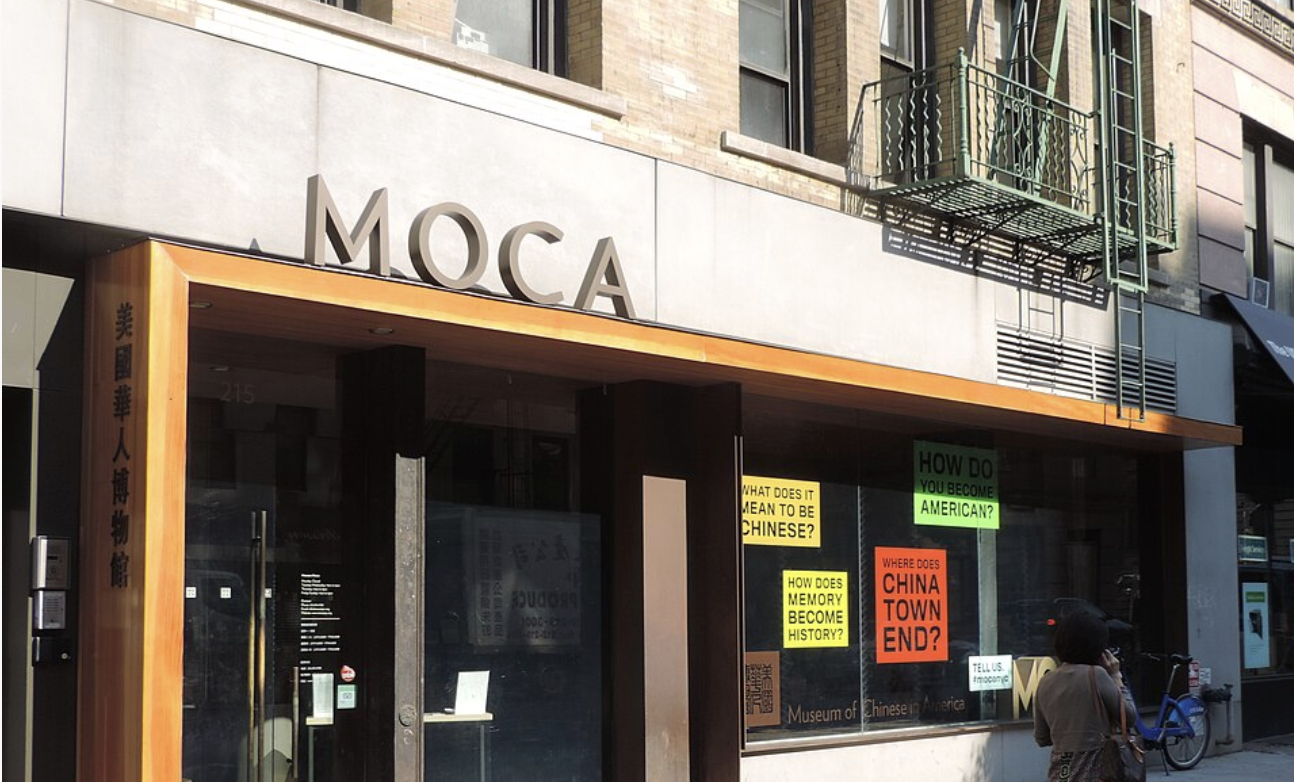
Founded in 1980, the Museum of Chinese in America (MOCA) serves as the primary repository for the 160-year history of Chinese people in the United States. Located in a space designed by architect Maya Lin, the museum features a central courtyard inspired by traditional Chinese house designs, which serves as a metaphorical “lung” for the building. The core exhibition, With a Single Step, chronicles the journey from the first arrivals in the mid-19th century to the complex, diverse community of today.
The museum is particularly noted for its community-driven archives, which include oral histories, family photographs, and salvaged artifacts from defunct neighborhood businesses. One of the most striking sections deals with the Chinese Exclusion Act of 1882, providing essential context for the social barriers early residents faced. Visitors can also view contemporary art installations that explore Asian-American identity through modern lenses.
Unlike larger Manhattan institutions, MOCA offers an intimate, focused narrative that feels deeply personal to the surrounding streets. It is the ideal starting point for a cultural tour because it provides the historical framework needed to understand the significance of the landmarks you will see later in the day. The gift shop is also a valuable resource for curated books on local urban history and unique neighborhood-themed merchandise.
Best for: Visitors seeking a deep historical context before exploring the neighborhood’s streets.
Skip if: You have limited time and prefer outdoor sightseeing over academic exhibits.
⛪ Church of the Transfiguration
| Type | Historic Religious Landmark |
|---|---|
| Location | |
| Hours | Varies by service; generally open mornings |
| Price / Fee | Free (Donations welcome) |
| Phone | (212) 962-5157 |
| Website | https://www.transfigurationnyc.org/ |
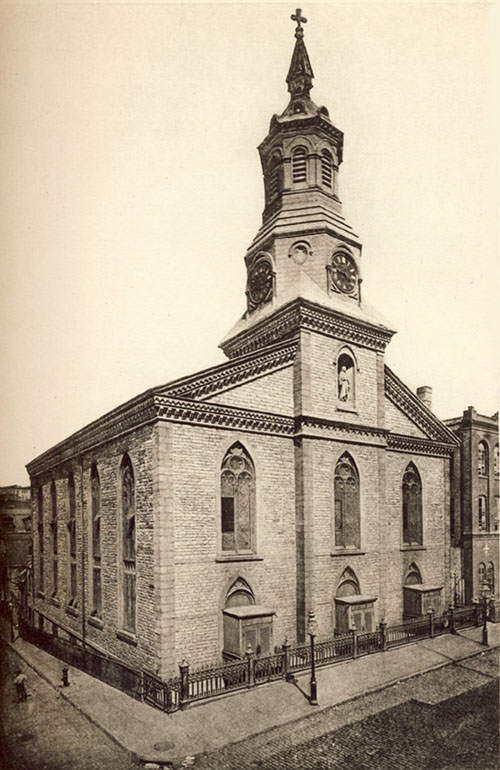
Standing at the corner of Mott and Pel Streets since 1801, the Church of the Transfiguration is a living chronicle of Manhattan’s immigrant waves. Originally built as the Zion Protestant Episcopal Church, the Georgian-style structure eventually served the Irish and Italian populations before becoming a central spiritual hub for the Chinese community. It is often cited as the oldest Roman Catholic church building in the city, notable for its stone masonry and copper-clad steeple.
The church is unique for its trilingual outreach, offering services in English, Cantonese, and Mandarin to accommodate the neighborhood’s diverse residents. Its architecture reflects a fusion of styles; while the exterior is classic 19th-century New York, the interior and community halls frequently host cultural celebrations like the Lunar New Year and the Mid-Autumn Festival. The parish school next door remains one of the few remaining parochial schools in lower Manhattan, serving the local immigrant population for generations.
A specific detail often missed by passersby is the church’s role during the 19th-century “Five Points” era. It was one of the few stable institutions in what was then considered the most dangerous slum in the world. Today, it remains a quiet sanctuary of architectural continuity amidst the constant turnover of the neighborhood. Visitors are welcome to view the sanctuary during non-service hours, provided they maintain a respectful silence for worshipers.
Best for: Architecture enthusiasts and those interested in the multi-ethnic history of the Lower East Side.
Skip if: You are uncomfortable entering active religious spaces.
Afternoon: The Living Landscape
🌳 Columbus Park

| Type | Public Park / Cultural Gathering Hub |
|---|---|
| Location | |
| Hours | 6:00 AM – 10:00 PM (Daily) |
| Price / Fee | Free |
| Phone | (212) 639-9675 |
| Website | https://www.nycgovparks.org/parks/columbus-park-m015/ |
Columbus Park is the “communal living room” of Chinatown. Located on the site of the infamous Five Points (depicted in Gangs of New York), the park was transformed in the late 19th century into a public space to alleviate the crowding of the tenements. Today, it is the primary site for community life: on any given morning, you will find hundreds of seniors practicing Tai Chi, playing intricate games of Mahjong, or performing Cantonese Opera under the pavilion.
The park is divided into several sections, including a large synthetic turf field and a historic pavilion building. The southern end features a statue of Dr. Sun Yat-sen, the founding father of the Republic of China, which serves as a major focal point for political and cultural rallies. The atmosphere here is loud, musical, and intensely social, offering a rare glimpse into the daily social rhythms of the neighborhood that are often hidden behind restaurant doors.
One locally specific insight: the Mahjong tables at the park’s northern end are almost always occupied. While visitors are welcome to watch, these are highly competitive games played by regulars who have been coming for decades. The park serves as a vital psychological buffer for residents living in cramped apartments, making it one of the most used and culturally significant green spaces in all of Manhattan.
Best for: People-watching and experiencing the neighborhood’s active community life first-hand.
Skip if: You are looking for a quiet, secluded park experience; the noise level is consistently high.
🏮 Doyers Street

| Type | Historic Landmark Street |
|---|---|
| Location | |
| Hours | Open 24/7; Pedestrian-only seasonal hours vary |
| Price / Fee | Free |
| Phone | Not available |
| Website | Not available |
Doyers Street is a single-block, L-shaped corridor that holds more history per square foot than almost any other street in NYC. Known historically as “The Bloody Angle,” its sharp curve once provided gang members (Tongs) an easy way to ambush rivals in the early 20th century. Today, it is much more peaceful, having been converted into a frequent pedestrian plaza featuring vibrant ground murals and seasonal art installations that transform the asphalt into a canvas.
The street is home to the landmark Nom Wah Tea Parlor (est. 1920) and several historic barbershops located in the basements. Walking through Doyers feels like entering a different era; the overhead tenement fire escapes and the tight bend create a cinematic canyon effect. The street has been used in countless film productions, from period dramas to modern thrillers, due to its preserved 19th-century scale and unique geometry.
A differentiating detail of Doyers is its seasonal rotation of street art. The city often collaborates with Asian-American artists to paint the entire street surface with intricate motifs, such as dragons or floral patterns, which makes every visit feel slightly different. It is a prime example of how Chinatown is modernizing its public spaces while leaning into its storied, occasionally dark, historical reputation. The street is best explored on foot to appreciate the hidden plaques and old-world storefronts.
Best for: Photographers and urban explorers looking for the most “Instagrammable” yet historical street in the city.
Skip if: You are in a rush; the narrow sidewalks can become congested with pedestrians and delivery workers.
⛩️ Kimlau Memorial Arch

| Type | War Memorial / Public Monument |
|---|---|
| Location | |
| Hours | Open 24/7 (Public Square) |
| Price / Fee | Free |
| Phone | Not available |
| Website | https://www.nycgovparks.org/parks/kimlau-square |
Located in the heart of Chatham Square, the Kimlau Memorial Arch was erected in 1962 to honor the Chinese Americans who died in service to the United States during World War II. Named after Lt. Benjamin Ralph Kimlau, a pilot who was shot down over the Pacific, the arch is a significant symbol of the community’s patriotism and its struggle for citizenship and recognition. The architecture is a fusion of traditional Chinese design elements and mid-century granite construction.
The arch serves as the ceremonial gateway to Chinatown’s eastern side, standing at the complex intersection where the Bowery, East Broadway, and St. James Place meet. Inscribed on the arch in both English and Chinese is a dedication to those who sacrificed for freedom. Each year, the American Legion LT B.R. Kimlau Post 1291 holds ceremonies here, making it a living site of veterans’ remembrance rather than just a static monument.
What makes this site culturally significant is its location in one of the busiest traffic hubs in lower Manhattan. The contrast between the solemn granite monument and the chaotic movement of city buses and trucks creates a powerful urban experience. It reminds visitors that the neighborhood’s history is inextricably linked to the broader American story of military service and civil rights. Nearby, you will also see the statue of Lin Zexu, a Qing dynasty official famous for his opposition to the opium trade, further layering the site with historical weight.
Best for: Military history buffs and those interested in the civic history of immigrant communities.
Skip if: You are sensitive to high traffic noise and exhaust; Chatham Square is a major transit artery.
Full Itinerary Summary
This 1-day cultural walk is designed for the Urban Historian or the traveler who wants to look beyond the surface level of Chinatown’s commercial facade. By starting at the Museum of Chinese in America, you gain the intellectual foundation of the neighborhood. Following this with visits to the Church of the Transfiguration and Columbus Park allows you to witness the spiritual and social “beating heart” of the community. Finishing at Doyers Street and the Kimlau Arch provides a visual and emotional bookend to the experience, showcasing both the neighborhood’s grit and its patriotic pride.
Total Walking Distance: Approximately 0.8 miles.
Total Time: 4–5 hours including museum time.
🗓 Best Time / Tips
✅ When to go
- Weekend Mornings (9:00 AM – 11:00 AM): This is the peak time for community activity in Columbus Park; you’ll see the most Tai Chi and social gaming during these hours.
- Lunar New Year: The area around the Kimlau Arch and Mott Street becomes the center of parades and lion dances, though it will be extremely crowded.
- Late Spring / Early Autumn: Ideal for the pedestrian plaza on Doyers Street, as the outdoor art installations are most vibrant in natural light.
- Sunday Mornings: Best for visiting the Church of the Transfiguration to hear the community bells and see the trilingual congregation.
⚠️ Quick tips
- Walking Shoes: Chinatown’s sidewalks can be uneven and occasionally wet from market activity; wear sturdy, comfortable footwear.
- Respect Social Gaming: While it is fascinating to watch the Mahjong in Columbus Park, avoid taking close-up photos of players without asking, as many prefer their privacy.
- Museum Booking: MOCA can occasionally reach capacity on weekends; booking your ticket online in advance is a smart move for Saturday visits.
- Public Transit: The 6, J, Z, N, Q, R, W trains to Canal Street will put you within a 5-minute walk of the start of this itinerary.
- Navigation: Use the Kimlau Arch as your “north star” for orientation; it is visible from several blocks away and helps you find your way back to the main Bowery artery.
Frequently Asked Questions
Is there an entrance fee for the Kimlau Arch?
No, the Kimlau Memorial Arch is located in a public square (Chatham Square) and is free to visit at any time. It is an outdoor monument maintained by the NYC Parks Department.
Can I take photos inside the Church of the Transfiguration?
Photography is generally allowed for personal use during non-service hours, but flash is discouraged. Always check for a sign at the entrance or ask a docent if available, especially during the Lunar New Year when the church is decorated.
How long should I spend at MOCA?
Most visitors find that 90 minutes to 2 hours is sufficient to read the main exhibits and see the rotating art installations. If you are a serious history buff, you may want to allow for 3 hours to listen to the oral history archives.
Are the sites wheelchair accessible?
MOCA is fully accessible with elevators and ramps. Columbus Park and Chatham Square (Kimlau Arch) are flat public spaces. Doyers Street is accessible, though the sidewalks are very narrow; the street itself is often pedestrian-only, which makes navigation easier. The Church of the Transfiguration has some steps at the main entrance, but an accessible side entrance is available.
Leave a Reply