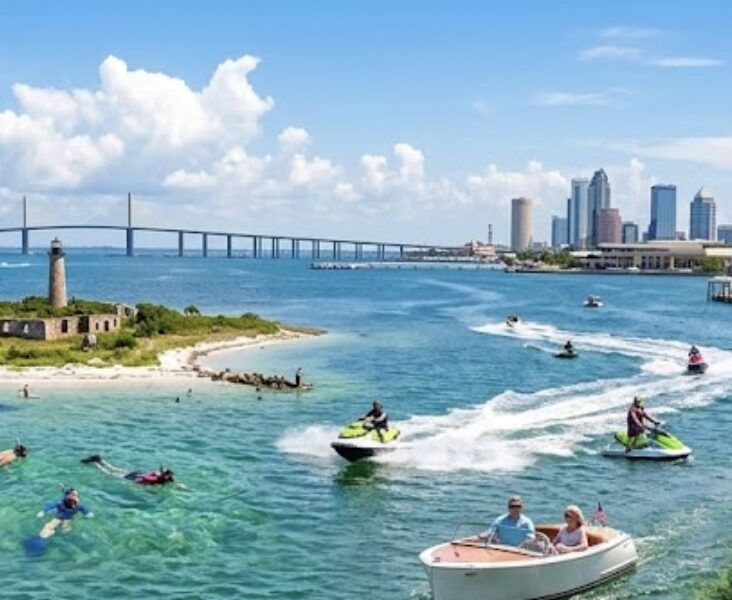

Beyond the Shoreline: Marine Activities in Tampa Bay
The Tampa Bay coastline is more than just a place to plant an umbrella; it is a complex marine ecosystem where the Intracoastal Waterway meets the open Gulf of Mexico. This geographical intersection creates ideal conditions for diverse wildlife, including a resident population of Atlantic bottlenose dolphins and various migratory sea birds. For travelers looking to move beyond the sand, the region offers a structured menu of water-based excursions, ranging from high-speed wildlife tours to educational snorkeling trips around submerged historical ruins.
Successful marine outings in this region require a basic understanding of Gulf conditions. Unlike the Atlantic, the Gulf of Mexico is relatively shallow near the shore, which means water clarity for snorkeling is heavily influenced by wind direction and tidal flow. Planning these activities requires checking tide charts and local sea conditions, as western winds can churn up sediment and reduce visibility to less than three feet. Conversely, calm days offer clear turquoise water that rivals the Caribbean, particularly near the offshore keys.
🤿 Egmont Key Snorkeling Excursion
| Type | Snorkeling & Island Tour |
|---|---|
| Location | |
| Hours | Departure 10:00 AM & 11:00 AM (Seasonal) |
| Price / Fee | $45 – $55 (Ferry/Snorkel combo) |
| Phone | (727) 398-6577 |
| Website | https://hubbardsmarina.com |
Egmont Key State Park is located at the mouth of Tampa Bay and is only accessible by boat. The island serves as a National Wildlife Refuge and a historic site, featuring the ruins of Fort Dade, which was established in 1898. The primary draw for snorkelers is the “Sunken Ruins”—remnants of the fort’s old power plant and sea walls that have since succumbed to coastal erosion and are now submerged in roughly 10 to 15 feet of water. These structures have effectively become an artificial reef, attracting gray snapper, sheepshead, and sea turtles.
The excursion typically begins at the Fort De Soto boat ramp, where ferries or private charters transport visitors the three miles to the island. Visibility at Egmont Key is generally the best in the region due to its distance from the mainland runoff. However, because the snorkeling takes place in open water near the ruins, it is subject to currents. Most tour operators provide masks, snorkels, and fins, but it is recommended to bring your own for a better fit. There are no facilities on the island other than the ferry’s onboard restroom, so you must carry in all water and food.
Aside from the water, the island’s interior features a brick path from the late 19th century and an active lighthouse that has been in operation since 1858. The gopher tortoise population here is significant; visitors will likely encounter dozens of these protected reptiles along the paths. A locally specific insight is that the island is a major nesting site for Royal Terns and Laughing Gulls; certain sections of the beach are roped off during nesting season (April–August) and are strictly enforced by park rangers.
Differentiating detail: This is the only location in Tampa Bay where you can snorkel among submerged military ruins and a 19th-century power plant.
Best for: History buffs, confident swimmers, and those seeking a remote island experience without cars or shops.
Who should skip: Inexperienced swimmers or those prone to seasickness, as the ferry crossing the shipping channel can get choppy.
🐬 Dolphin Quest & Eco-Tours
| Type | Wildlife Viewing |
|---|---|
| Location | |
| Hours | 9:00 AM – Sunset (Multiple daily departures) |
| Price / Fee | $25 – $35 (Adults) |
| Phone | (727) 392-7090 |
| Website | https://boattoursjohnspass.com |
John’s Pass Village and Boardwalk in Madeira Beach is the primary hub for commercial wildlife viewing in Pinellas County. The pass itself was created by a hurricane in 1848 and serves as a natural corridor for Atlantic bottlenose dolphins moving between the Gulf and the Intracoastal Waterway. Tours here range from large-capacity catamarans to smaller, more intimate rib boats. These tours focus on “The Narrows,” a stretch of water where dolphins are frequently seen foraging or socializing in the wake of boats.
Standard tours last approximately 90 minutes and are strictly non-interactive, adhering to the Marine Mammal Protection Act. This means boats maintain a safe distance and do not feed or swim with the animals. The “Dolphin Quest” boat is a locally recognizable bright yellow vessel designed with a low profile to provide better sightlines for photography. Operators often use hydrophones (underwater microphones) to allow passengers to hear the clicks and whistles of the dolphins, adding an educational layer to the sightseeing.
Logistically, parking at John’s Pass is notoriously difficult, especially during the John’s Pass Seafood Festival or spring months. The multi-level parking garage on the north side of the pass is the most reliable option, costing roughly $5.00 per hour. A specific community insight: the dolphins in this area are so well-known to locals that several individuals have been identified by their dorsal fin notches and named by the CMA (Clearwater Marine Aquarium) research teams that monitor them.
Differentiating detail: These tours offer a nearly 100% sighting success rate due to the resident dolphin population and the narrow geographical layout of the waterway.
Best for: Families with small children, photographers, and those who want a guaranteed wildlife encounter without getting wet.
Who should skip: Travelers looking for an “off the beaten path” experience, as John’s Pass is a high-density tourist commercial zone.
🚣 Shell Key Clear Kayak Tours
| Type | Guided Eco-Adventure |
|---|---|
| Location | |
| Hours | 8:00 AM – 6:00 PM (By reservation) |
| Price / Fee | $60 – $75 per person |
| Phone | Not available |
| Website | https://getupandgokayaking.com |
Shell Key Preserve is an 1,800-acre wilderness area managed by Pinellas County. The use of “Clear Kayaks”—completely transparent vessels—has become a hallmark of tours in this specific area. These kayaks allow paddlers to see directly through the hull into the shallow seagrass beds of the preserve. The ecosystem here is a critical nursery for marine life, where you can observe conchs, horseshoe crabs, and juvenile rays without disturbing the seabed. The water depth in the preserve’s interior rarely exceeds three feet, making it an accessible route for novice paddlers.
Tours typically launch from the Billy’s Stone Crab area in Tierra Verde or the Pinellas Bayway bridge access. The guided route takes paddlers through mangrove tunnels, which are dense thickets of Red and Black Mangroves that provide shelter for nesting birds like the Roseate Spoonbill. Guides provide ecological commentary on the importance of mangroves in coastal protection and water filtration. The tour usually includes a 20-minute stop on the sandbar of Shell Key, where visitors can disembark to look for intact whelk and olive shells.
A significant logistical note: because the kayaks are transparent, they act as a magnifying glass for the sun. SPF 50+ sunscreen and polarized sunglasses are essential to reduce glare and protect your skin. Also, because the preserve is a sensitive nesting area for shorebirds, visitors must stay out of designated “Bird Sanctuary” zones, which are clearly marked with signage. During the summer months, these tours are best taken at 8:00 AM to avoid the afternoon thunderstorms and the intense midday heat.
Differentiating detail: It uses 100% transparent hulls, allowing for a “glass-bottom boat” experience in a self-propelled, low-impact format.
Best for: Eco-conscious travelers, birdwatchers, and couples looking for a unique perspective on the Florida mangroves.
Who should skip: Individuals with lower-back issues (clear kayaks have basic seating) or those who prefer a motorized, effortless tour.
🧽 Sponge Diving Exhibition Tours
| Type | Cultural & Heritage Tour |
|---|---|
| Location | |
| Hours | 10:00 AM – 5:00 PM (Departures every hour) |
| Price / Fee | $15 – $25 (Adults) |
| Phone | (727) 942-3705 |
| Website | https://StNicholasBoatLine.com |
Tarpon Springs is home to the highest percentage of Greek-Americans in any U.S. city, a legacy of the sponge harvesting industry that began in the late 1800s. The St. Nicholas Boat Line offers a specific type of marine tour that differs from the nature-centric options elsewhere. These tours feature a live demonstration where a diver in a traditional copper-and-brass helmet (weighing nearly 170 lbs) descends from the boat to the riverbed to harvest a live sponge, illustrating how the industry operated for over a century.
The boat navigates the Anclote River, moving toward the Gulf. While on board, narrators explain the biology of the sea sponge—which is an animal, not a plant—and the history of the Greek divers who moved here from the Dodecanese Islands. The tour provides a perspective on the working waterfront of Tampa Bay, passing active shrimping fleets and sponge warehouses. It is a short, 35-40 minute excursion, making it easy to fit into a day spent exploring the shops and bakeries on Dodecanese Boulevard.
For those interested in the environmental side, the tours also pass the Anclote Key Lighthouse and various oyster bars. Parking is available in several private lots near the docks for a flat fee of $5.00 to $10.00. A locally specific tip: visit the Spongeorama Exhibit Center (free admission) before your boat tour to see the vintage films of the diving fleet in the 1940s, which provides much-needed context for the live demonstration on the boat.
Differentiating detail: This is a heritage-based tour focused on the 100-year history of the Greek sponge diving industry, featuring live deep-sea diving gear demonstrations.
Best for: History enthusiasts, cultural travelers, and those who want a shorter boat ride that focuses on human industry rather than just nature.
Who should skip: Travelers who are only interested in swimming, snorkeling, or modern recreational activities.
🗓 Best Time / Tips
✅ When to go
- September through October: The water is at its absolute warmest (often 85°F+), making it ideal for snorkeling and kayaking. The summer “love bug” season is over, and the humidity begins to break.
- Late Winter (February – March): This is the best time for manatee sightings in the springs and canals, though the Gulf water is usually too cold for snorkeling without a wetsuit (low 60s°F).
- Early Morning (8:00 AM – 10:00 AM): The Gulf is typically calmest in the morning. By 2:00 PM, the “sea breeze” kicks in, which can make kayaking and small boat tours much more difficult due to chop.
⚠️ Quick tips
- Polarized Sunglasses: These are not just for style; they cut the surface glare of the water, allowing you to see dolphins and rays beneath the surface that you would otherwise miss.
- Reef-Safe Sunscreen: Pinellas County ecosystems are sensitive. Use mineral-based sunscreens (Zinc Oxide or Titanium Dioxide) to prevent damaging the seagrass and coral near Egmont Key.
- Hydration: The reflection of the sun off the white sand and water significantly accelerates dehydration. Always carry 25% more water than you think you need for an offshore excursion.
- Check “Tides4Fishing”: Even if you aren’t fishing, this website provides excellent data on water clarity and tidal movements for the Tampa Bay region.
Frequently Asked Questions
Can I swim with dolphins in Tampa Bay?
No. Under the Marine Mammal Protection Act, it is illegal to feed, swim with, or harass wild dolphins. While there are facilities in other parts of Florida that offer “encounter” programs with captive dolphins, all boat tours in Tampa Bay are strictly observation-only.
What is the visibility like for snorkeling?
Visibility is highly variable. On a calm day with an incoming tide, you can see 15–20 feet at Egmont Key. After a storm or with a strong west wind, visibility can drop to 2 feet. Always call your tour operator the morning of the trip to ask about current water conditions.
Are life jackets required?
For kayaking and boat tours, yes. Florida law requires all vessels to have a wearable life jacket for each person on board. For kayaks, most rental companies require you to wear them at all times, especially when crossing open channels.
Is it safe to kayak with sharks?
Yes. Sharks in the shallow preserve areas are typically small bonnetheads or nurse sharks, which are non-aggressive. They are more afraid of your kayak than you are of them. You are much more likely to see a manatee or a sea turtle than a large shark in the shallow mangroves.
Do I need to book in advance?
For specialized tours like the Clear Kayaks or the Egmont Key Ferry, reservations are essential and often sell out 1–2 weeks in advance during the spring and summer. Standard dolphin tours at John’s Pass can often be booked on the same day.
Leave a Reply