
The Urbanyfolk Guide: Redefining Manhattan
Welcome back to Urbanyfolk! Our biggest piece of advice for visiting Manhattan is to resist the gravitational pull of Midtown. The immediate radius around Times Square and Rockefeller Center is visually overwhelming, but it is often devoid of the actual texture that makes New York the greatest city in the world. To truly experience Manhattan, you need to explore the architectural marvels lining the rivers, dive deep into the gritty, culturally dense streets of the Lower East Side, and seek out the preserved historical pockets that shaped the nation.
This expanded itinerary deliberately skips the standard observation decks and chain flagships. Instead, it pairs futuristic urban parks with deeply authentic culinary markets, medieval art sanctuaries, and Revolutionary War-era taverns. Here are six ways to experience Manhattan with genuine substance.
🌳 Little Island

| Type | Public Park / Architectural Landmark |
|---|---|
| Location | |
| Hours | Opens daily at 6:00 AM (Closing times vary from 9:00 PM to 12:00 AM by season) |
| Price / Fee | Free |
| Phone | Not applicable |
| Website | littleisland.org |
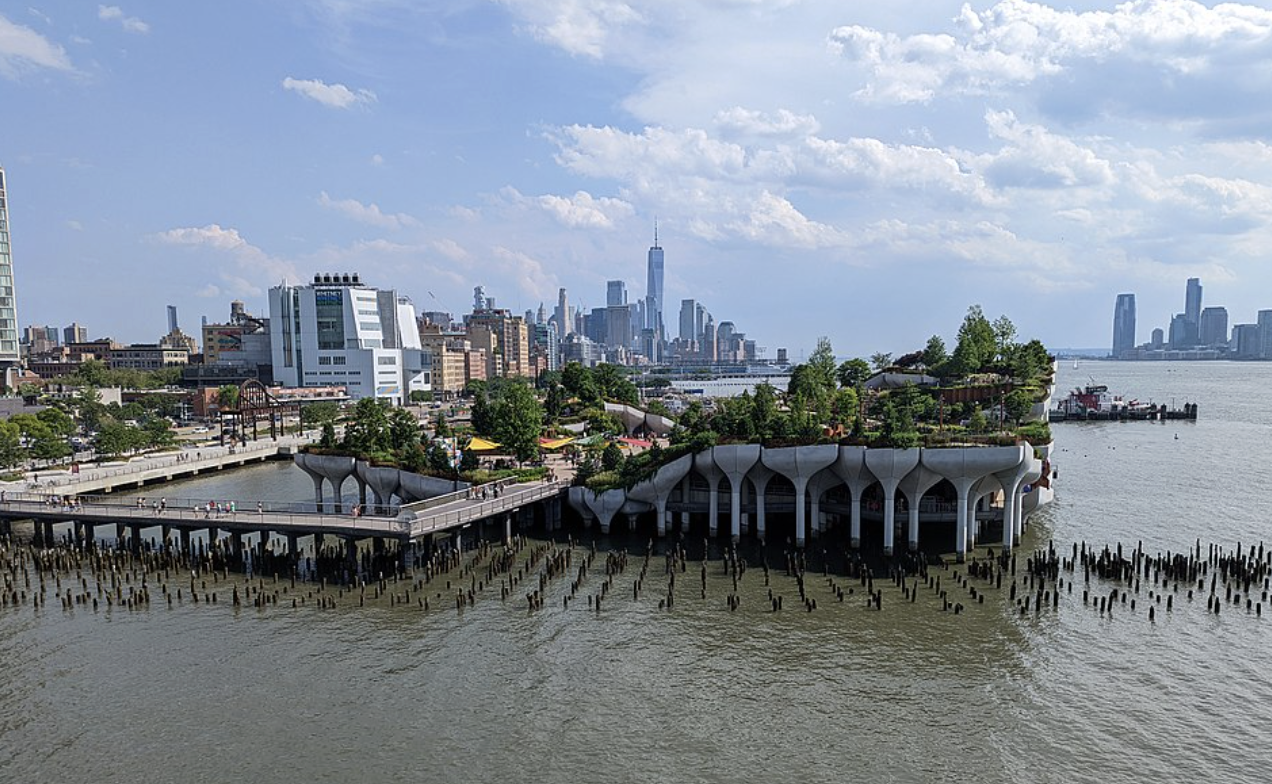
Rising from the Hudson River on 132 massive, tulip-shaped concrete pylons, Little Island is a masterclass in modern urban landscaping. Designed by Thomas Heatherwick, this 2.4-acre floating park replaced the dilapidated Pier 54. It operates as a fully functioning botanical garden, featuring over 350 species of flowers, trees, and shrubs that change dramatically with the seasons.
The park is designed with rolling hills and winding pathways that deliberately block out the noise of the adjacent West Side Highway, creating a remarkably serene environment. The highest elevation points in the park offer sweeping, unobstructed views of the Lower Manhattan skyline to the south, and the New Jersey waterfront to the west. It also features a stunning 687-seat amphitheater (“The Amph”) that hosts live performances overlooking the water.
Because it is entirely free, Little Island is extremely popular. Arriving mid-afternoon on a beautiful summer Saturday means you will be sharing the narrow pathways with thousands of other people. Early mornings are magical here, offering soft light and quiet breezes off the river.
What makes it unique: It is a seemingly physics-defying, floating green space that perfectly blends surreal, futuristic architecture with lush horticulture.
Who should skip it: Travelers who severely dislike heights or open water edges, as the park is entirely elevated over the Hudson River.
Best for: Architecture lovers, photographers, and anyone looking for a scenic rest stop after walking the High Line.
🗝️ The Tenement Museum

| Type | History Museum / Cultural Institution |
|---|---|
| Location | |
| Hours | Monday – Thursday 10:00 AM – 5:00 PM, Friday – Sunday 10:00 AM – 6:00 PM |
| Price / Fee | ~$30 per adult (Timed tours only) |
| Phone | (877) 975-3786 |
| Website | tenement.org |
If you want to understand how New York City was actually built, you skip the billionaire mansions of Fifth Avenue and head straight to Orchard Street. The Tenement Museum is not a traditional museum of artifacts behind glass; it is a fully immersive historical experience located inside two actual, preserved tenement buildings that housed an estimated 15,000 working-class immigrants between the 1860s and the 1980s.
You cannot simply wander the halls here. Access is strictly via guided, small-group tours. Each tour focuses on a meticulously recreated apartment belonging to a specific, real family that once lived in the building—from Irish survivors of the Great Famine in the 1860s to Puerto Rican migrants in the 1960s. The educators are brilliant, weaving intensely personal stories of survival, labor, and community into the broader narrative of American immigration.
The museum sits in the heart of the Lower East Side. Because the tours take place in historic, 19th-century walk-up buildings, they feature narrow, steep staircases, though the museum does offer specific, highly accessible ground-floor tours and neighborhood walking tours. Tickets routinely sell out days in advance, making spontaneous visits nearly impossible.
What makes it unique: It offers profound, hyper-localized storytelling inside the exact, historically preserved rooms where NYC’s immigrant working class actually lived.
Who should skip it: Travelers looking for a quick, 20-minute drop-in attraction, or those who dislike structured, guided group tours.
Best for: History buffs, sociologists, and visitors seeking a deeply moving, educational experience.
🥟 Essex Market

| Type | Indoor Food Market / Culinary Hub |
|---|---|
| Location | |
| Hours | Monday – Saturday 8:00 AM – 8:00 PM, Sunday 10:00 AM – 6:00 PM |
| Price / Fee | Free to enter; meals generally $15 – $30 |
| Phone | Not applicable |
| Website | essexmarket.nyc |
Just a few blocks from the Tenement Museum sits Essex Market, the culinary heartbeat of the Lower East Side. Originally established in 1940 by Mayor Fiorello LaGuardia to clear pushcart vendors off the crowded streets, the market recently relocated into a massive, gorgeous 37,000-square-foot facility within the Essex Crossing development. Despite the shiny new building, it has fiercely retained its historic soul.
The market is home to over 30 independent vendors, many of whom have been operating in the neighborhood for decades. It is a stunning cross-section of global cuisine and local groceries. You can buy fresh, hand-pulled mozzarella, grab a massive plate of Dominican roasted pork, sip artisan coffee, and pick up rare imported spices all under a single, climate-controlled roof.
Unlike heavily tourist-driven food halls in Midtown, Essex Market still functions as an actual grocery hub for Lower East Side locals, giving it a much more grounded, neighborhood vibe. There is plenty of public seating on the mezzanine level, making it the absolute perfect place to grab a casual, diverse lunch after finishing your Tenement Museum tour.
What makes it unique: It successfully bridges an 80-year-old historic public market ethos with a gleaming, modern facility, showcasing incredibly diverse, authentic cuisines.
Who should skip it: Diners looking for full-service, sit-down waitstaff dining in a highly formal, quiet environment.
Best for: Foodies, groups who can’t agree on one type of cuisine, and budget-conscious travelers.
🏰 The Met Cloisters

| Type | Art Museum / Historic Architecture |
|---|---|
| Location | |
| Hours | Thursday – Tuesday 10:00 AM – 5:00 PM (Closed Wednesdays) |
| Price / Fee | $30 Adults (NY State residents pay what you wish) |
| Phone | (212) 923-3700 |
| Website | metmuseum.org/visit/met-cloisters |
While millions flock to The Metropolitan Museum of Art’s main campus on 5th Avenue, its spectacular northern branch remains one of Manhattan’s most breathtaking secrets. Perched on a massive hill in Fort Tryon Park at the northern tip of the island, The Met Cloisters is dedicated entirely to the art, architecture, and gardens of medieval Europe.
The building itself is an architectural marvel. In the 1930s, elements from several different ruined medieval French abbeys were purchased, dismantled stone by stone, shipped across the Atlantic, and seamlessly reconstructed overlooking the Hudson River. Walking through the stone corridors, open-air courtyards, and pristine herb gardens feels completely detached from the modern chaos of New York City.
Inside, you will find illuminated manuscripts, stained glass, and the world-famous Unicorn Tapestries. Taking the A train up to the 190th Street station and walking through Fort Tryon Park to reach the museum is half the magic, offering sweeping views of the New Jersey Palisades that rival anything you’d see in the Hudson Valley.
What makes it unique: It is the only museum in America dedicated exclusively to medieval art, housed within actual reconstructed European monasteries.
Who should skip it: Travelers on a very tight schedule who don’t have the 45+ minutes it takes to commute to Upper Manhattan from Midtown.
Best for: Art history enthusiasts, couples seeking a romantic and quiet atmosphere, and photographers.
🚡 Roosevelt Island Tramway

| Type | Public Transit / Scenic Viewpoint |
|---|---|
| Location | |
| Hours | Sunday – Thursday 6:00 AM – 2:00 AM, Friday – Saturday 6:00 AM – 3:30 AM |
| Price / Fee | $2.90 (Standard MTA subway fare / OMNY) |
| Phone | (212) 832-4555 |
| Website | rioc.ny.gov/302/Tram |
Instead of paying $45 to stand behind thick glass at a crowded observation deck, you can get one of the most dynamic, cinematic views of Manhattan for the swipe of a standard subway card. The Roosevelt Island Tramway is a commuter aerial tramway that spans the East River, connecting Midtown East to the narrow, two-mile-long residential sliver known as Roosevelt Island.
The bright red tram cars glide up to 250 feet in the air, soaring right alongside the massive steel structure of the Ed Koch Queensboro Bridge. The three-minute ride provides unparalleled views of the Midtown skyline, the rushing river below, and the chaotic avenues of Manhattan stretching out in a rigid grid. It is an exhilarating, slightly retro slice of urban infrastructure.
Once you arrive on Roosevelt Island, you don’t just have to turn immediately back around. You can walk south along the waterfront promenade to Franklin D. Roosevelt Four Freedoms Park, a striking, minimalist granite memorial designed by Louis Kahn that offers a completely unique, peaceful vantage point of the United Nations building across the water.
What makes it unique: It is one of the only commuter aerial tramways in North America, offering million-dollar skyline views for under three dollars.
Who should skip it: Anyone with a severe fear of heights or enclosed spaces suspended over water.
Best for: Budget travelers, videographers, and families with kids who love unique transit.
🍻 Fraunces Tavern

| Type | Historic Restaurant / Pub / Museum |
|---|---|
| Location | |
| Hours | Daily 11:00 AM – 12:00 AM (Museum hours vary) |
| Price / Fee | $20 – $45 for meals; Museum admission is ~$10 |
| Phone | (212) 968-1776 |
| Website | frauncestavern.com |
Hidden among the towering glass-and-steel canyons of the Financial District sits a stout, brick building that holds an incredible amount of American history. Fraunces Tavern claims to be the oldest surviving building in Manhattan. More importantly, it is the exact location where General George Washington gathered his Continental Army officers on December 4, 1783, to bid them an emotional farewell after winning the Revolutionary War.
Today, it operates as a dual-purpose space. The ground floor is a highly atmospheric, functioning pub and restaurant with roaring fireplaces, dark wood paneling, and a fantastic craft beer and whiskey selection. It manages to serve excellent food without falling into a cheesy, theme-park trap. It feels exactly like the historic colonial tavern it is.
Upstairs, you will find the Fraunces Tavern Museum, which preserves the famous Long Room where Washington gave his speech, alongside an impressive collection of Revolutionary War artifacts. It is the perfect place to grab a pint and a hearty meal after spending a cold afternoon walking around nearby Wall Street or the Staten Island Ferry terminal.
What makes it unique: You can literally drink a pint of ale in the exact room where the founding commanders of the United States celebrated the end of the Revolutionary War.
Who should skip it: Travelers looking for an ultra-modern, thumping nightlife scene or sleek fine dining.
Best for: History buffs, whiskey enthusiasts, and anyone visiting NYC during the colder winter months.
🗓 Best Time / Tips
✅ When to go
- Geographic Grouping: Manhattan is huge. Group your activities by neighborhood to avoid spending your whole day underground. Pair Little Island with the High Line; the Tenement Museum with Essex Market; and Fraunces Tavern with a walk around the Financial District. The Met Cloisters requires a dedicated morning or afternoon trip uptown.
- Early Starts for Parks: Little Island opens at 6:00 AM. Going before 9:00 AM guarantees you almost exclusive access for photography without the crowds.
⚠️ Quick tips
- Book the Tenement Museum in Advance: I cannot stress this enough—The Tenement Museum requires pre-purchased, timed-entry tickets. You will be turned away if you show up without one.
- Master OMNY and the Subway: Skip the yellow cabs and Ubers for daytime transit. Traffic across Manhattan is grueling. Use the MTA subway by simply tapping your contactless credit card or phone at the turnstile (OMNY system). This works for the Roosevelt Island Tramway as well!
- Wear Proper Footwear: The biggest mistake visitors make is underestimating how much walking they will do. Manhattan is built on concrete, cobblestones, and asphalt. Leave the rigid dress shoes at the hotel.
Frequently Asked Questions
Is it worth visiting Times Square?
Yes, but with a massive caveat: go once, at night, to see the sheer scale of the neon lights. Spend exactly 15 to 20 minutes taking it in, and then leave. Do not eat there, and do not spend your valuable daytime hours there, as it lacks the authentic culture found in neighborhoods like the Lower East Side, the West Village, or Washington Heights.
Are these locations wheelchair accessible?
Little Island, the new Essex Market facility, and the Roosevelt Island Tramway are highly modern and fully ADA accessible. The Met Cloisters and Fraunces Tavern have elevators and ramps, though some historic uneven flooring exists. The Tenement Museum is more complex; because it is housed in historic 19th-century walk-ups, many of the upper-floor apartment tours require climbing steep stairs. However, they do offer specific, highly accessible ground-floor tours.
Can I use my standard subway card for the tram?
Yes! The Roosevelt Island Tramway is fully integrated into the MTA system. You do not need a special ticket. You can swipe a MetroCard or simply tap your phone/credit card at the turnstile just like a normal subway ride.
Leave a Reply