
The Ultimate Guide to Rochester: New York’s Most Underrated City
When travelers look toward New York State, the itinerary is almost always monopolized by the towering density of Manhattan or the sprawling wilderness of the Adirondacks. Tucked away on the southern shore of Lake Ontario, Rochester is routinely overlooked, yet it stands as one of the most culturally dense and historically significant mid-sized cities in the Northeast. Built on the booming flour milling industry of the 19th century and later transformed into a global technology and optics hub by pioneers like George Eastman, the city possesses a heavy industrial framework that has been slowly repurposed into museums, breweries, and vibrant arts districts.
To understand Rochester is to embrace its distinct contradictions. It is a city where you can view one of the world’s most prestigious photographic archives in a Gilded Age mansion, and then immediately drive downtown to consume a 3,000-calorie plate of macaroni salad and meat sauce in a working-class diner. It features a massive 96-foot natural waterfall plunging directly through its urban center. Navigating the city is highly accessible, lacking the aggressive gridlock of larger coastal hubs, making it an incredibly efficient weekend destination. This guide outlines the core architectural, culinary, and historical pillars that define this vastly underrated upstate powerhouse.
📷 The George Eastman Museum

| Type | Museum / Historic Estate |
|---|---|
| Location | |
| Hours | Tuesday – Saturday 10:00 AM – 5:00 PM, Sunday 11:00 AM – 5:00 PM |
| Price / Fee | $20 Adults |
| Phone | (585) 327-4800 |
| Website | eastman.org |
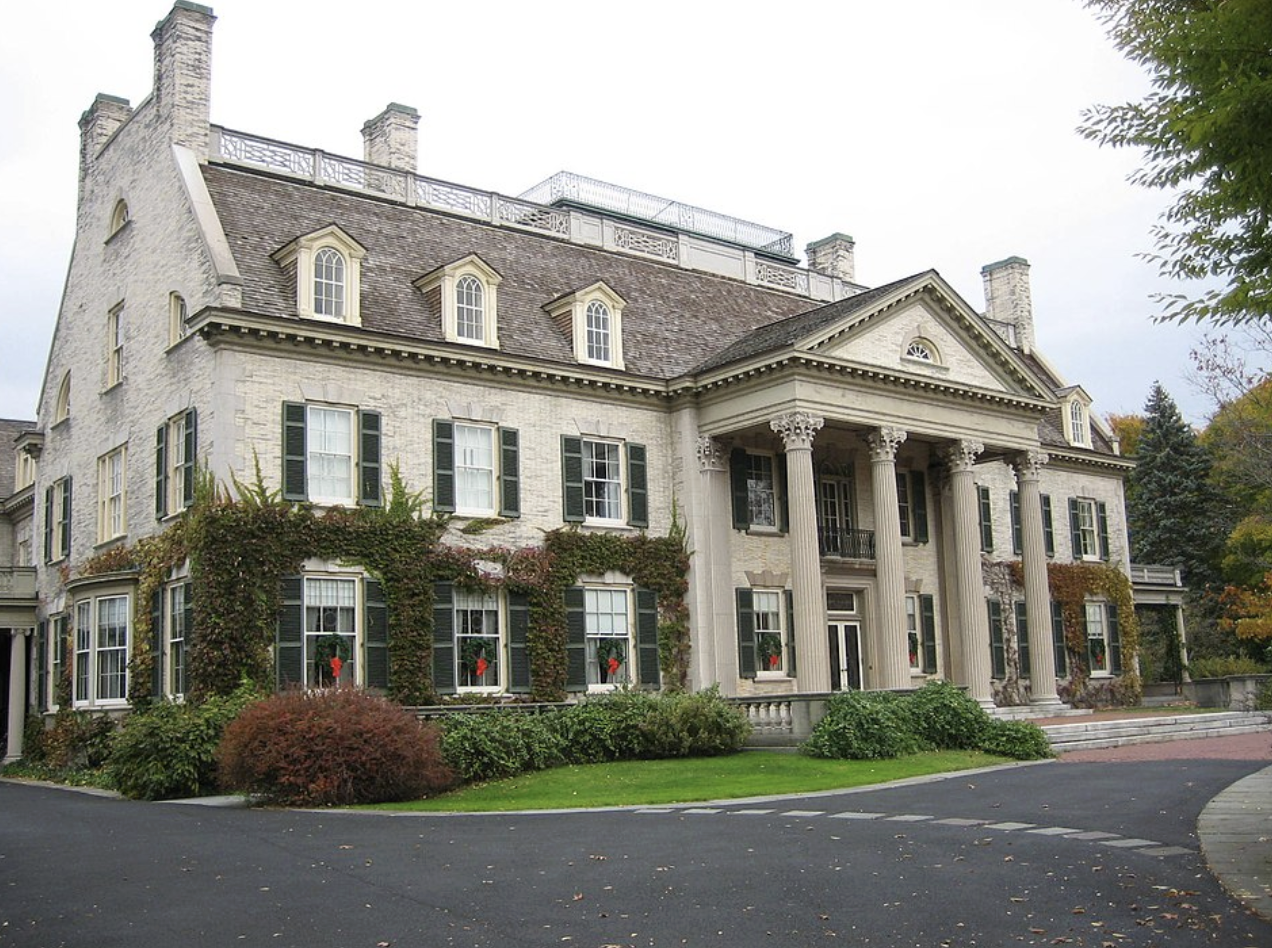
Established in 1947, the George Eastman Museum holds the title of the world’s oldest photography museum, housing a staggering archive of over 400,000 photographs and 28,000 motion picture films. The museum is seamlessly integrated into the sprawling 35,000-square-foot Colonial Revival mansion of George Eastman, the founder of the Eastman Kodak Company and the man largely responsible for bringing photography to the mainstream public. Wandering through the estate provides a dual experience: examining rare, early daguerreotypes while simultaneously exploring the impeccably preserved 1905 living quarters of an industrial titan.
Beyond the primary galleries, the estate grounds are masterfully curated, featuring the historic Terrace Garden, Rock Garden, and West Garden, which burst into highly manicured blooms during the upstate spring. The facility also houses the Dryden Theatre, a 500-seat cinematic institution that remains one of the few theaters in the world equipped to safely project highly flammable, original nitrate film prints, drawing cinephiles from across the country for specialized screenings.
Situated in the prestigious East Avenue Historic District, the museum is flanked by massive, turn-of-the-century mansions and sits adjacent to the highly walkable Park Avenue neighborhood, famous for its independent cafes. The museum provides a dedicated, free visitor parking lot, removing any urban parking stress. Crowd levels are generally manageable and quiet, fostering a contemplative environment that allows visitors to closely study the intricate historical archives without feeling rushed.
What makes it unique: It is the only institution in the world that combines a premier international photographic archive with the preserved, original Gilded Age estate of the inventor of roll film.
Who should skip it: Travelers seeking high-energy, physically interactive exhibits, or those traveling with young children who might struggle in a quiet, heavily artifact-based environment.
Best for: Photography professionals, film historians, and architecture enthusiasts.
🌊 High Falls

| Type | Urban Waterfall / Public Landmark |
|---|---|
| Location | |
| Hours | 24 hours a day, 7 days a week |
| Price / Fee | Free |
| Phone | Not available |
| Website | Not available |
While most major cities are built around static bodies of water, Rochester is geographically bisected by the dramatic power of the Genesee River, which drops violently over a 96-foot precipice directly in the center of the downtown grid. Known as High Falls, this natural geological feature was the sole reason the city was settled, providing the hydraulic power that fueled the massive flour mills of the 1800s. Today, the surrounding mills have been largely hollowed out or repurposed, but the roaring falls remain a striking juxtaposition against the modern brick and steel skyline.
The primary viewing artery is the Pont de Rennes, a pedestrian bridge converted from a former vehicular span that sits directly at the base of the gorge, offering unobstructed, dead-on views of the plunging water. For an elevated perspective, the rooftop terrace of the adjacent Genesee Brew House provides sweeping views of both the waterfall and the gorge, allowing visitors to take in the industrial landscape while sampling one of New York’s oldest continually operating brewing operations.
Located in the historic Brown’s Race neighborhood, visiting the falls is entirely free and takes roughly 30 to 45 minutes to appreciate fully. Visitors driving to the site can utilize the High Falls Garage, which typically charges a minor hourly fee. Be acutely aware of the upstate New York weather; during the depths of winter, the mist from the falls freezes on the surrounding gorge walls, creating a stunning, albeit freezing, glacial spectacle that requires heavy wind-proof layers to view comfortably.
What makes it unique: It is one of the only major, 96-foot natural waterfalls located squarely inside the dense industrial downtown core of a major American city.
Who should skip it: Visitors looking for a sprawling, all-day nature hike, as this is a localized urban viewing platform rather than a state park.
Best for: Landscape photographers, budget travelers, and industrial history buffs.
🎲 The Strong National Museum of Play

| Type | Interactive Museum / Cultural Institution |
|---|---|
| Location | |
| Hours | Friday – Thursday 10:00 AM – 5:00 PM |
| Price / Fee | $25 – $30 per person |
| Phone | (585) 263-2700 |
| Website | museumofplay.org |
To categorize The Strong National Museum of Play as merely a “children’s museum” is a massive understatement; it is a sprawling, 285,000-square-foot academic and interactive institution dedicated to the history of how humans play. Recently expanded with a 90,000-square-foot addition, it operates as the ultimate repository for international toy and game history. It is the official home of both the National Toy Hall of Fame and the World Video Game Hall of Fame, drawing roughly half a million annual visitors and ranking among the largest history museums in the United States.
The sheer scale of the internal exhibits is staggering. Visitors can walk through a massive, humidified indoor butterfly garden, navigate a functioning replica of a retro arcade featuring dozens of playable, original 1980s cabinets, or study pristine, first-edition board games from the 19th century. The museum treats the concept of play with deep academic rigor, providing dense historical context alongside the highly tactile, physical exhibits.
The museum serves as the anchor for Rochester’s newly developed “Neighborhood of Play,” a massive urban revitalization project built over a filled-in portion of the former Inner Loop highway. Parking is localized in a colossal adjacent municipal garage, eliminating street parking struggles. Because of its massive regional draw, crowd levels are exceptionally high, particularly on weekends, school holidays, and during the harsh upstate winters when indoor activities are at a premium. Arriving directly at opening time is a crucial strategy to avoid the densest midday bottleneck.
What makes it unique: It houses the most comprehensive collection of toys, dolls, and electronic games on earth, blending academic archiving with fully playable retro exhibits.
Who should skip it: Travelers seeking quiet, traditional gallery spaces or adults who are easily overwhelmed by high decibel levels and large crowds of energetic children.
Best for: Families, retro video game enthusiasts, and pop culture historians.
🍽️ Nick Tahou Hots
| Type | Restaurant / Historic Diner |
|---|---|
| Location | |
| Hours | Monday – Saturday 8:00 AM – 8:00 PM (Closed Sundays) |
| Price / Fee | ~$12 – $18 per plate |
| Phone | (585) 436-0184 |
| Website | garbageplate.com |
No trip to Rochester is complete without confronting its most infamous and heavily guarded culinary export: the Garbage Plate. Founded in 1918 by Greek immigrant Alex Tahou, Nick Tahou Hots is the undisputed birthplace and legal trademark holder of the dish. Operating out of an unapologetically gritty, no-frills diner on West Main Street, the establishment has resisted decades of gentrification and modern culinary trends, serving the exact same hyper-caloric comfort food that originally sustained the city’s blue-collar industrial laborers.
The mechanics of a traditional Garbage Plate are an exercise in calculated chaos. It begins with a split base of heavily seasoned home fries and cold, creamy macaroni salad. This is topped with either two hamburger patties or two red hot dogs. The entire mound is then completely submerged in a fiercely guarded, spiced, Greek-style meat hot sauce, chopped raw onions, and a heavy squirt of mustard. Diners are handed a slice of thick Italian bread intended to soak up the residual, intensely savory grease at the bottom of the plate.
The diner sits just west of the downtown core, in a neighborhood that retains much of its mid-century industrial edge. While it was once a legendary 3:00 AM rite of passage for local university students, post-pandemic hours have shifted strictly to daytime and early evening service. There is a small, dedicated parking lot adjacent to the building. The dining room is entirely unpretentious, utilizing scuffed laminate tables and fluorescent lighting; the focus here is strictly on the survival and consumption of the food itself.
What makes it unique: It is the ground-zero historical birthplace of the original Garbage Plate, holding the exact 100-year-old recipe that spawned a massive regional food culture.
Who should skip it: Health-conscious eaters, diners seeking a refined or romantic atmosphere, and vegetarians looking for complex plant-based options.
Best for: Culinary daredevils, comfort food loyalists, and budget travelers.
🎵 Record Archive
| Type | Retail / Music Venue |
|---|---|
| Location | |
| Hours | Monday – Saturday 10:00 AM – 6:00 PM (Closed Sundays) |
| Price / Fee | Free to enter; merchandise varies |
| Phone | (585) 244-1210 |
| Website | recordarchive.com |
In an era entirely dominated by digital streaming, Record Archive stands as a mammoth physical monument to analog media. Operating continuously since 1975, this independent retail giant has expanded into a massive warehouse space holding an inventory of over 250,000 new and used vinyl records, CDs, cassettes, and vintage audio equipment. It operates as the beating heart of Rochester’s deeply ingrained, fiercely independent local music and arts scene, drawing collectors from across the northeastern United States.
Beyond its staggering inventory—which spans obscure 1960s jazz pressings to hyper-modern indie releases—the store fundamentally altered the retail experience by becoming the first record store in New York State to obtain a beer and wine license. The facility features a fully operational bar constructed from vintage stereo consoles, allowing patrons to grab a local upstate IPA or cider and casually browse the dense stacks of physical media for hours.
Located on Rockwood Street in a slightly industrial corridor adjacent to the Neighborhood of the Arts, the store serves as a major community hub. The back half of the warehouse features a dedicated stage that frequently hosts live, local music performances and release parties. Parking is incredibly easy with a massive dedicated front lot. Crowd levels are generally steady but spike massively during live weekend shows and the annual frenzy of Record Store Day.
What makes it unique: It seamlessly combines a staggering quarter-million-piece physical media archive with a fully operational craft beer bar and live music stage inside a massive warehouse.
Who should skip it: Travelers with zero interest in physical music media, or those flying with strict luggage constraints who cannot transport 12-inch vinyl records safely.
Best for: Vinyl collectors, music historians, and rainy day browsers.
🗓 Best Time / Tips
✅ When to go
- Late Spring to Early Fall (May – October): Rochester’s parks, gardens, and urban spaces are spectacular during these months. The weather is generally mild, allowing for comfortable walking between downtown sites like High Falls.
- May for the Lilac Festival: Rochester is globally famous for its lilacs. Visiting in mid-May allows you to experience the massive, free festival in Highland Park, adding incredible value to your trip.
- Weekdays for Museums: To avoid the intense crowds at The Strong National Museum of Play, aim for a Tuesday or Wednesday morning.
⚠️ Quick tips
- Drive or Rideshare: While Rochester has the RTS bus system, the city is spread out, and having a car makes navigating between neighborhoods like East Avenue and West Main Street incredibly fast and efficient. Traffic is rarely severe.
- Prepare for Lake Effect: If visiting between November and March, you must be prepared for sudden, intense lake-effect snow squalls coming off Lake Ontario. Four-wheel drive and heavy winter gear are mandatory.
- Embrace the industrial edge: Some of Rochester’s best spots, including Nick Tahou Hots and parts of High Falls, are in transitional, older industrial neighborhoods. They are safe during the day, but don’t expect polished, sterile tourist zones.
Frequently Asked Questions
Why is Rochester called the “Flour City”?
In the mid-19th century, Rochester was one of the largest flour-producing cities in the world. The massive waterfalls of the Genesee River provided the hydraulic power needed to run dozens of massive mills, grinding wheat shipped in via the Erie Canal. The moniker shifted slightly to the “Flower City” in later decades as the city became a major hub for nurseries and seed companies.
Is downtown Rochester safe for walking?
The primary cultural districts, such as the East Avenue Historic District, the Neighborhood of the Arts, and the Neighborhood of Play, are highly trafficked and generally safe for daytime and early evening walking. However, downtown Rochester empties out significantly after business hours. Standard urban awareness is required at night, and driving or using a rideshare between distant neighborhoods after dark is recommended over walking long distances.
What exactly is in the hot sauce on a Garbage Plate?
It is crucial to understand that the “hot sauce” on a Garbage Plate is not a liquid pepper sauce like Tabasco. It is a thick, highly seasoned, Greek-style meat sauce—essentially a chili—made from ground beef, heavy amounts of cinnamon, allspice, cayenne pepper, and cloves. It is deeply savory rather than purely fiery.
Do I need an entire day for The Strong Museum?
If you are traveling with children or are a deeply invested retro video game enthusiast, yes, you can easily spend 5 to 6 hours inside The Strong. The sheer volume of exhibits and playable games is exhausting in the best way possible. If you are doing a brisk adult walkthrough, allocate at least 3 hours.
Leave a Reply