
Beyond Times Square: 5 Manhattan Dining Institutions Loved by Locals
New York City’s culinary landscape is often overshadowed by flashy, Instagram-centric openings that prioritize aesthetics over substance. For true Manhattanites, the “best” places are rarely those with the loudest marketing; they are the neighborhood institutions that have survived decades of gentrification and economic shifts. These locations serve as community anchors where the quality of the product—be it a hand-milled pizza crust or a century-old mutton chop—remains the primary focus.
In 2026, the trend among locals has shifted away from overpriced “concept” dining toward high-integrity, technique-driven comfort food. This itinerary focuses on five Manhattan staples that offer a look into the city’s diverse heritage, from Jewish appetizing traditions to the burgeoning Malaysian coffee shop culture. Each selection avoids the typical tourist traps, offering instead a seat at the table where real New Yorkers actually spend their Friday nights and Sunday mornings.
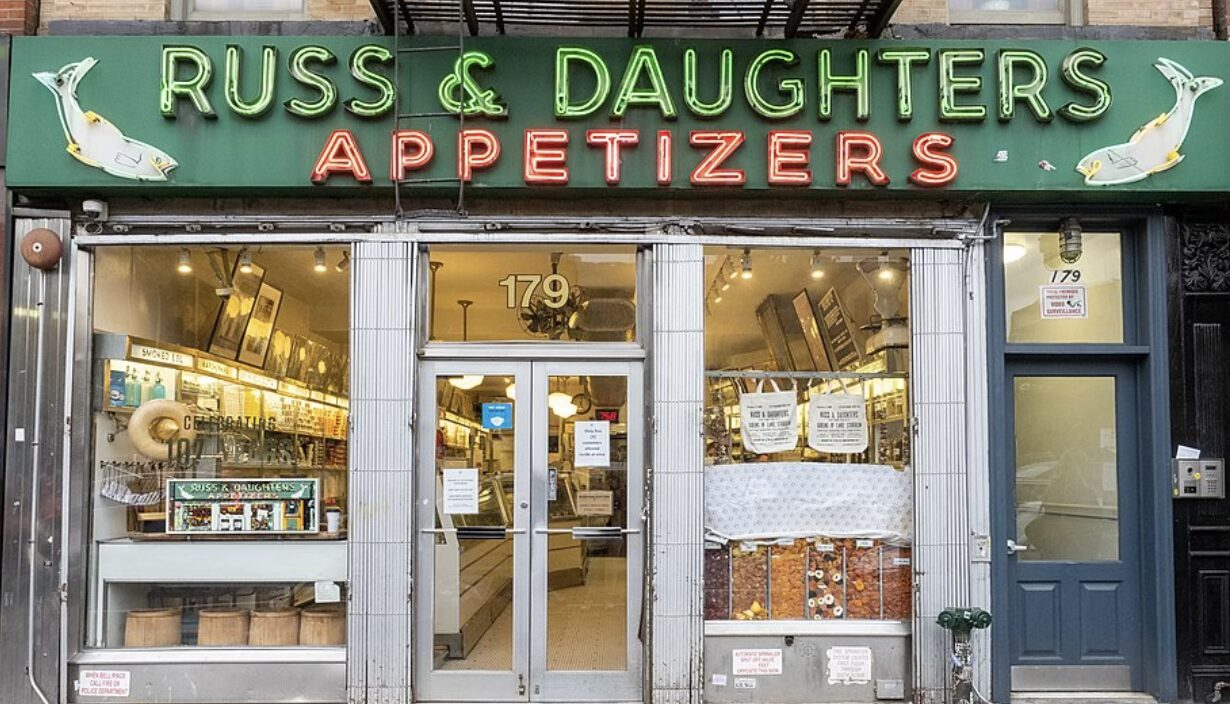
🥯 Russ & Daughters (Lower East Side)

| Type | Jewish Appetizing Store |
|---|---|
| Location | |
| Hours | 8:00 AM – 4:00 PM Daily |
| Price / Fee | $15 – $45 per person |
| Phone | (212) 475-4880 |
| Website | https://www.russanddaughters.com/ |
Founded in 1914 by Joel Russ, this is a rare example of a fourth-generation family business that remains a global benchmark for quality. Russ & Daughters is technically an “appetizing” store, a Jewish culinary distinction referring to “the food that goes with a bagel” (fish and dairy) as opposed to a delicatessen which serves meat. The storefront on Houston Street retains its original neon signage and white-coated counter service, offering a tangible link to the Lower East Side’s immigrant history.
Locals come here for the Gaspe Nova Smoked Salmon and the private-label caviar, often bypassing the newer “Cafe” location in favor of the original take-out counter experience. The process is a ritual: you take a number, wait among the neighborhood regulars, and watch as “slicers” expertly carve translucent ribbons of fish. The Super Heebster sandwich—featuring whitefish salad, wasabi-infused flying fish roe, and horseradish cream cheese on a bagel—is a modern local classic that demonstrates their ability to innovate while respecting tradition.
Crowds are high on weekend mornings, often resulting in wait times of 45 minutes or more. To avoid the peak, visit on a Tuesday or Wednesday afternoon when the pace is slower and the staff has more time to discuss the nuances of different lox cures. Parking in the Lower East Side is notoriously difficult; the F train to Second Avenue is the most efficient transit route. While the prices are higher than a standard bodega, the sourcing—ranging from hand-picked wild salmon to traditional bialys—justifies the investment for food purists.
Differentiating detail: It is the first American business to include “& Daughters” in its name, highlighting its unique feminist and family-centric history.
Best for: Connoisseurs of smoked fish and those who appreciate the theater of traditional counter service.
Who might want to skip it: Those looking for a cheap, quick “bagel and schmear” or a sit-down hot breakfast (visit the Russ & Daughters Cafe on Orchard St for seating).
🍕 Scarr’s Pizza
| Type | Pizzeria |
|---|---|
| Location | |
| Hours | 12:00 PM – 11:00 PM (Fri/Sat til 12 AM) |
| Price / Fee | $5 – $35 |
| Phone | (212) 334-3481 |
| Website | https://www.scarrspizza.com/ |
In a city obsessed with pizza, Scarr’s stands out by focusing on agricultural integrity. Founder Scarr Pimentel made waves by installing a flour mill in the basement, allowing the shop to mill its own fresh, heritage grains daily. This results in a crust that is more nutritious and flavorful than the standard bleached-flour slices found at every Manhattan corner. The shop moved to a larger space across Orchard Street in 2023 to accommodate its massive local following, yet it maintains a strictly “old school” New York vibe.
The “Regular Slice” is the benchmark, but locals frequently opt for the Hot Honey Pepperoni Square. The sauce is bright and acidic, balanced by high-quality mozzarella and a crust that manages to be both airy and structural. Unlike the tourist-heavy Joe’s Pizza in Greenwich Village, Scarr’s attracts a younger, neighborhood-centric crowd that appreciates the craft-beer selection and the lack of pretense. It is a destination where the technique of bread-making is applied to the city’s most democratic food.
Expect a line out the door on Friday nights, but it moves quickly. There is limited booth seating in the back, but most locals eat their slices on the sidewalk or while walking to a nearby bar. The transit situation is simple: take the F, M, J, or Z trains to Delancey St-Essex St. Because they mill their own grain, the texture of the dough can vary slightly by season—a detail that pizza nerds discuss with the same intensity as wine vintages.
Differentiating detail: It is one of the only pizzerias in Manhattan that mills 100% of its own flour on-site using organic grains.
Best for: People who want a “perfect” New York slice but care about ingredient transparency and sourdough-like crust complexity.
Who might want to skip it: Those who prefer “dollar slices” or thick, greasy, traditional fast-food pizza.
🍷 Buvette New York
| Type | French Gastrothèque |
|---|---|
| Location | |
| Hours | 8:00 AM – 12:00 AM Daily |
| Price / Fee | $25 – $60 per person |
| Phone | Not available |
| Website | https://ilovebuvette.com/ |
Buvette, established by Chef Jody Williams, is the quintessential West Village local haunt. It describes itself as a “Gastrothèque,” a hybrid between a cafe, a bar, and a bistro. The space is notoriously small and cramped, featuring exposed brick, marble counters, and vintage European accents. Despite opening branches in Paris and Tokyo, the original Grove Street location remains a fiercely protected spot for neighborhood residents who value its “all-day” dining philosophy.
The menu is famous for its steamed eggs, prepared using the steam wand of an espresso machine, resulting in an impossibly fluffy texture. Other staples include the Coq au Vin served in small jars and the Tartine with shaved prosciutto and cultured butter. It is not a place for large groups or formal multi-course meals; rather, it encourages a casual, European style of grazing. The wine list is focused on small French producers, and the atmosphere shifts seamlessly from a bright espresso bar in the morning to a candlelit wine cellar at night.
Buvette does not take reservations. On weekends, the wait for brunch can exceed two hours, during which locals usually put their name in and walk to nearby Washington Square Park. To experience it like a true regular, go for a “late-night” snack after 10:00 PM on a weekday. The service is professional but brisk, reflecting the high-density nature of the West Village. Note that the seating is extremely tight; you will likely be brushing elbows with your neighbors.
Differentiating detail: It popularized the “all-day French bistro” concept in New York, focusing on small-plate versions of classic heavy French dishes.
Best for: Solo travelers or couples looking for a romantic, high-aesthetic dining experience that feels authentically “Village.”
Who might want to skip it: Families with strollers or anyone who suffers from claustrophobia or dislikes long waits for a table.
☕ Kopitiam
| Type | Malaysian Cafe |
|---|---|
| Location | |
| Hours | 9:00 AM – 9:00 PM Daily |
| Price / Fee | $15 – $30 per person |
| Phone | (646) 609-3700 |
| Website | https://www.kopitiamnyc.com/ |
Kopitiam represents the New Wave of Lower East Side dining, where traditional heritage meets modern urban sensibilities. Chef Kyo Pang, a third-generation Malaysian immigrant, opened this space to preserve Nyonya (Peranakan) cuisine. The name “Kopitiam” refers to traditional coffee shops found in Malaysia and Singapore, and the shop’s interior reflects this with simple wooden stools and a counter-service model that encourages a quick but soulful meal.
The standout dish is the Nasi Lemak, Malaysia’s national dish, featuring coconut rice, fried anchovies, peanuts, and a spicy sambal, all traditionally wrapped in a pandan leaf. Locals also flock here for the White Coffee, which is roasted with palm oil margarine for a distinctively smooth, nutty flavor. The Pulut Inti (blue-tinted glutinous rice with coconut) is a visually striking and authentic dessert that has become a neighborhood favorite. Unlike the more commercialized Chinatown spots nearby, Kopitiam feels like a personal community kitchen.
Crowd levels are medium to high, especially during the lunch rush (12:00 PM – 2:00 PM). The space operates on a first-come, first-served basis, and while there is some seating, many patrons take their orders to go. It is located on the edge of the Lower East Side and Chinatown, accessible via the F train at East Broadway. The price point is extremely accessible for the quality of the ingredients, making it a staple for younger residents and food industry workers.
Differentiating detail: It is one of the only places in NYC focusing specifically on the labor-intensive, spice-heavy Nyonya style of Malaysian cooking.
Best for: Adventurous eaters and those looking for bold, spicy Southeast Asian flavors in a casual setting.
Who might want to skip it: Those who are sensitive to spicy food or who are looking for a formal, sit-down restaurant experience with table service.
🥩 Keens Steakhouse

| Type | Historic Steakhouse |
|---|---|
| Location | |
| Hours | 11:45 AM – 10:30 PM (Weekends from 5 PM) |
| Price / Fee | $60 – $150 per person |
| Phone | (212) 947-3636 |
| Website | https://www.keens.com/ |
While Midtown is often a “no-go” zone for locals, Keens Steakhouse is the exception. Established in 1885, it is one of the oldest restaurants in New York City. It is famously home to the world’s largest collection of churchwarden clay pipes, which hang from the ceiling in thousands; historically, members would have their pipes stored here for use during visits. Notable pipe owners included Albert Einstein, Babe Ruth, and Teddy Roosevelt. The atmosphere is dark, wood-paneled, and thick with historical gravitas.
While most New York steakhouses are defined by the Porterhouse, Keens is legendary for its Mutton Chop. This massive, saddle-cut piece of lamb is nearly two inches thick and possesses a flavor profile much deeper and richer than typical beef steaks. For locals who find Peter Luger too touristy or out-of-the-way in Brooklyn, Keens offers a superior, more “Manhattan” experience with a better bar program and more consistent service. The Prime Rib, served in a “King’s Cut,” is another local favorite for those celebrating milestones.
Reservations are mandatory and should be made at least 2–3 weeks in advance for prime weekend slots. If you can’t get a table, the Pub Room offers a smaller, more casual menu (including a smaller version of the mutton chop) on a walk-in basis. Keens is located near Herald Square and Penn Station, making it easily accessible via almost every major subway line. Unlike the modern “corporate” steakhouses nearby, Keens feels like a private club that has miraculously remained open to the public for over 140 years.
Differentiating detail: It is the only major NYC steakhouse that prioritizes mutton over beef as its “signature” dish, and it houses a museum-grade collection of historic smoking pipes.
Best for: History buffs, meat lovers, and anyone seeking a “classic New York” formal dinner that isn’t a tourist trap.
Who might want to skip it: Vegetarians or those who find dark, Victorian-style “gentlemen’s club” aesthetics to be outdated.
🗓 Best Time / Tips
✅ When to go
- Weekdays (Tues-Thurs): To avoid the weekend crowds at Buvette and Russ & Daughters.
- Late Lunch (2:30 PM): The “sweet spot” for Scarr’s and Kopitiam to find a seat without a long queue.
- Post-10 PM: For a late-night dessert or wine at Buvette when the atmosphere becomes truly local and intimate.
- Holiday Season: Midtown is chaotic, but Keens is exceptionally cozy with its fireplaces and dark wood during December.
⚠️ Quick tips
- Walk-in for Keens: If you lack a reservation, the Pub Room at Keens is a local secret for getting the same food in a more casual setting.
- The “Appetizing” Rule: Remember that Russ & Daughters does not serve meat; don’t go there asking for a pastrami sandwich.
- Subway over Rideshare: These locations are in high-traffic zones (LES/Midtown/West Village). The subway is always faster than an Uber.
- Bring a tote bag: If you visit Russ & Daughters or Kopitiam, you’ll likely want to buy pantry items like house-made sambal or babka to take home.
Frequently Asked Questions
Do these places require reservations?
Keens Steakhouse absolutely requires them. Buvette and Scarr’s Pizza do not take them at all. Russ & Daughters (Houston St) is a counter-service shop, but their “Cafe” location on Orchard St does accept reservations via Resy.
Which neighborhood should I stay in to be near these?
Staying in the Lower East Side or East Village puts you within walking distance of three of the five (Russ & Daughters, Scarr’s, and Kopitiam). The West Village and Midtown are easily accessible via the F or BDFM subway lines.
Are these locations child-friendly?
Scarr’s and Kopitiam are very casual and family-friendly. Keens is formal but welcoming to well-behaved children. Buvette is extremely tight and difficult for strollers; it is better suited for adults or older children.
How much should I tip at these establishments?
Standard NYC etiquette is 20% for table service (Keens, Buvette). For counter service (Scarr’s, Kopitiam, Russ & Daughters), tipping is optional but 10-15% is common if you are dining in or if the service was exceptional.
Leave a Reply