
Essential New York City: A Guide to the Five Pillars of the Five Boroughs
New York City operates as a collection of micro-cities, each defined by its own architectural legacy and cultural density. Navigating the city effectively requires more than just a list of locations; it requires an understanding of how these spaces function within the daily rhythm of Manhattan and Brooklyn. From 19th-century engineering marvels to the most modern additions to the skyline, this guide focuses on the primary destinations that offer a comprehensive view of the city’s evolving urban design and historical significance.
While the city’s tourism landscape is constantly shifting, several key institutions and public spaces remain the foundation of any itinerary. This selection prioritizes locations that blend historical preservation with modern utility, ensuring that visitors engage with the city’s past while experiencing its current trajectory. The following entries provide technical details, logistical advice, and specific insights to help optimize a visit in 2026.
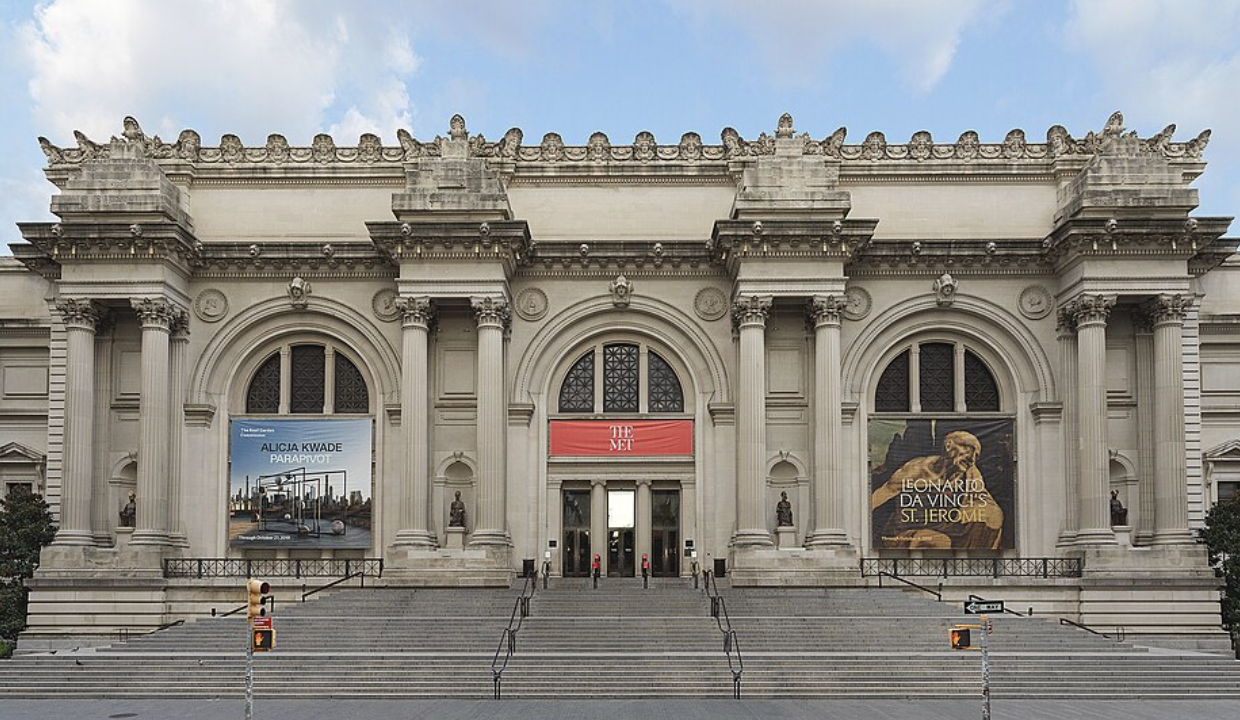
🖼 The Metropolitan Museum of Art (The Met)

| Type | Art Museum / Historical Institution |
|---|---|
| Location | |
| Hours | Sun–Tue & Thu: 10:00 AM – 5:00 PM; Fri & Sat: 10:00 AM – 9:00 PM; Closed Wed |
| Price / Fee | $30 Adults; $22 Seniors; $17 Students (Non-NY Residents) |
| Phone | (212) 535-7710 |
| Website | https://www.metmuseum.org |
Founded in 1870, The Metropolitan Museum of Art is the largest art museum in the Americas, encompassing over 2 million square feet of gallery space at its Fifth Avenue location. The building itself is an architectural evolution, featuring a Beaux-Arts facade designed by Richard Morris Hunt that has become synonymous with the Museum Mile stretch of the Upper East Side. Inside, the collection spans 5,000 years of global history, with specific highlights including the Temple of Dendur—an Egyptian temple from 15 B.C. housed in a massive glass-walled wing—and the extensive Arms and Armor department.
Logistically, the Met operates on a fixed-price admission model for out-of-state visitors, while New York State residents and students from NJ and CT retain a “pay-what-you-wish” option. To avoid peak congestion, it is advisable to arrive shortly after opening or during the extended evening hours on Fridays and Saturdays when crowds significantly thin. The museum is easily accessed via the 4, 5, or 6 subway lines to the 86th Street station, followed by a three-block walk west. For those driving, an on-site parking garage is available at Fifth Avenue and 80th Street, though rates are high, typically starting around $40 for a few hours.
A notable 2026 detail involves the Cantor Rooftop Garden, which hosts rotating contemporary art installations from April through October. This space provides a rare, unobstructed view over the Central Park canopy toward the Midtown skyline, serving as a quiet respite from the dense galleries below. Because the museum is too vast to see in a single day, visitors should prioritize two or three specific wings—such as the American Wing or the European Paintings—rather than attempting a comprehensive walkthrough, which often leads to “museum fatigue.”
Differentiating Detail: It is the only museum in NYC where the ticket includes same-day admission to The Met Cloisters, a medieval-focused branch in Upper Manhattan built using elements from five different French monasteries.
Best for: History enthusiasts and those seeking a deep, academic dive into global civilizations through art and artifacts.
Who should skip it: Travelers with limited time (under three hours) or those who prefer contemporary, focused galleries over expansive, encyclopedic collections.
🌿 The High Line

| Type | Elevated Public Park / Urban Design Project |
|---|---|
| Location | |
| Hours | Daily, 7:00 AM – 10:00 PM (Winter hours may vary) |
| Price / Fee | Free |
| Phone | (212) 500-6035 |
| Website | https://www.thehighline.org |
The High Line is a 1.45-mile-long elevated linear park created on a former New York Central Railroad spur. Standing 30 feet above street level, it serves as a case study in adaptive reuse, transforming a piece of industrial infrastructure into a landscaped pedestrian thoroughfare. The path stretches from Gansevoort Street in the Meatpacking District through Chelsea and terminates at the Hudson Yards development on 34th Street. The landscaping, designed by Piet Oudolf, utilizes native “pioneer” species to mimic the wild growth that occurred on the tracks during their decades of abandonment.
In 2026, a major draw for visitors is the High Line Plinth, a dedicated space for monumental contemporary art. The current installation, “The Light That Shines Through the Universe” by Tuan Andrew Nguyen, features a 30-foot-tall Buddha statue that dominates the intersection of 10th Avenue and 30th Street. The park is strictly pedestrian; bicycles, scooters, and dogs are not permitted, making it a dedicated space for walking and viewing the city’s architecture. Crowd levels are consistently high on weekends, so a weekday morning visit is recommended for a more tranquil experience.
Access is provided by several staircases and elevators located along the route, with major entries at 14th, 23rd, and 30th Streets. The Chelsea Market passage at 15th Street offers an integrated indoor-outdoor experience where the trail cuts directly through a historic building. For transportation, the A, C, E, and L subway lines serve the southern end at 14th Street, while the 7 train terminates directly at the northern end in Hudson Yards. Parking in Chelsea is notoriously difficult and expensive; utilizing public transit to one end of the park and walking its length is the standard logistical approach.
Differentiating Detail: Unlike traditional parks, the High Line provides a mid-block perspective of Manhattan, allowing walkers to look directly down the cross-streets of Chelsea from an elevated, car-free vantage point.
Best for: Fans of modern architecture, urban planning, and those who want to see the “New New York” of Hudson Yards.
Who should skip it: People with severe crowd anxiety or those looking for traditional park amenities like large open lawns or athletic fields.
🏙 Summit One Vanderbilt

| Type | Observation Deck / Immersive Art Experience |
|---|---|
| Location | |
| Hours | Daily, 9:00 AM – 12:00 AM |
| Price / Fee | Starts at ~$49 (Adults) |
| Phone | (212) 290-0070 |
| Website | https://summitov.com |
Rising 1,401 feet above Midtown, Summit One Vanderbilt is the most modern and experiential of New York City’s observation decks. Opened in 2021, it differentiates itself from the Empire State Building or Top of the Rock by offering a multi-sensory experience designed by Kenzo Digital. The centerpiece, “Air,” is a series of rooms with floor-to-ceiling mirrors that create a disorienting, infinite reflection of the skyline and the visitors themselves. This architectural trick blurs the line between the interior space and the exterior city, making it a primary destination for photography and modern art enthusiasts.
Logistical planning is critical for Summit, as tickets are time-slotted and frequently sell out weeks in advance, particularly for “Golden Hour” sunset entries. Because of the mirrored floors, there is a mandatory dress code: skirts and dresses are not recommended unless worn with leggings, and visitors must wear provided shoe covers to prevent scratching the glass. High-quality sunglasses are also suggested, as the sunlight reflections can be intense during midday. The entrance is located within Grand Central Terminal, making it one of the most accessible landmarks in the city via the 4, 5, 6, 7, and S subway lines or Metro-North trains.
The experience culminates on the upper levels with “Levitation,” two glass skyboxes that suspend visitors 1,063 feet over Madison Avenue. Unlike the open-air deck of the Empire State, Summit is primarily an indoor, climate-controlled environment, though it does feature an outdoor terrace at the very top. For those wanting an extra thrill, the “Ascent” glass elevators travel up the exterior of the building for an additional fee. While the price point is higher than traditional decks, the combination of art installations and panoramic views of the Chrysler Building (which is located directly across the street) justifies the cost for many.
Differentiating Detail: It is the only observation deck that prioritizes mirrored immersion, creating a 360-degree environment where the sky and the city are reflected below your feet.
Best for: Photographers, families with teenagers, and visitors who want an “Instagram-ready” experiential attraction rather than a traditional museum-style observation deck.
Who should skip it: Those with severe vertigo or people who find highly reflective, crowded, and bright sensory environments overwhelming.
🚉 Grand Central Terminal

| Type | Transportation Hub / Landmark Architecture |
|---|---|
| Location | |
| Hours | Daily, 5:15 AM – 2:00 AM |
| Price / Fee | Free |
| Phone | (212) 340-2583 |
| Website | https://www.grandcentralterminal.com |
Grand Central Terminal is more than a transit hub; it is a masterwork of Beaux-Arts architecture that was saved from demolition in the 1970s through the efforts of Jacqueline Kennedy Onassis. Completed in 1913, the Main Concourse is famous for its celestial ceiling mural, which depicts the constellations of the zodiac in reverse—a quirk attributed to the mural being painted from a “divine perspective” looking down. The central information booth is topped by a four-faced opal clock, estimated to be worth between $10 million and $20 million, serving as the city’s most iconic meeting point.
Beyond the Concourse, the terminal contains several unique “urban secrets” that require exploration. The Whispering Gallery, located outside the Oyster Bar on the lower level, features an acoustic anomaly where a person standing in one corner of the arched entryway can hear a whisper from someone in the opposite corner with perfect clarity. For a more sophisticated experience, the Campbell Apartment—formerly the private office of a 1920s tycoon—now functions as a high-end cocktail lounge that retains its original leaded glass windows and hand-painted ceiling. The terminal also houses a thriving market and numerous retail shops, including a flagship Apple Store overlooking the concourse.
In terms of accessibility, the terminal has recently expanded with Grand Central Madison, a massive deep-level concourse that brings the Long Island Rail Road (LIRR) directly to the East Side. This has increased daily foot traffic to over 750,000 people, so visitors should be mindful not to block commuter flow when taking photographs. The terminal is best experienced in the early morning or mid-afternoon between rush hours. Parking is virtually non-existent on 42nd Street; visitors should exclusively use the subway or Metro-North to arrive directly at the platform level.
Differentiating Detail: It is a living landmark that functions as a high-speed commuter terminal while maintaining the grandeur and decorative detail of a century-old palace.
Best for: History buffs, architecture students, and travelers looking for a free, high-impact indoor experience.
Who should skip it: Travelers who are easily stressed by high-density crowds or those who have no interest in historical preservation and vintage design.
🌉 Brooklyn Bridge & Brooklyn Bridge Park

| Type | Engineering Landmark / Waterfront Park |
|---|---|
| Location | |
| Hours | Bridge: 24/7; Park: 6:00 AM – 1:00 AM |
| Price / Fee | Free |
| Phone | (718) 222-9939 |
| Website | https://brooklynbridgepark.org |
Completed in 1883, the Brooklyn Bridge was the first steel-wire suspension bridge in the world and remains one of the most recognizable feats of 19th-century engineering. Its distinct Gothic-arched towers were built using Maine granite and Ohio limestone, designed by John A. Roebling and completed by his son Washington Roebling and daughter-in-law Emily Roebling. The pedestrian promenade sits on an elevated platform above the vehicle traffic, providing a 1.1-mile walk with panoramic views of the Lower Manhattan skyline and the Statue of Liberty. As of late 2021, a dedicated bike lane was moved to the car level, making the wooden promenade much safer and more comfortable for pedestrians.
Crossing from Manhattan brings you directly into DUMBO (Down Under the Manhattan Bridge Overpass) and the sprawling 85-acre Brooklyn Bridge Park. This waterfront park is built on former industrial piers and features several distinct sections, including the pebble beach at Main Street and Jane’s Carousel—a restored 1922 merry-go-round housed in a glass pavilion. The park is designed with sustainability in mind, utilizing recycled granite from city bridges and soil from the World Trade Center site to create noise-dampening hills that block the sound of the nearby Brooklyn-Queens Expressway.
For the best experience, start the walk on the Manhattan side (near City Hall and the 4, 5, 6, J, or Z subway lines) and walk toward Brooklyn to keep the DUMBO skyline and the bridge’s cables in view. Once in Brooklyn, you can explore the various “Piers” (Pier 1 through 6), which offer everything from soccer fields and pickleball courts to quiet bird-watching gardens. Public bathrooms are available at several points in the park, notably at Pier 1 and the Fornino building at Pier 6. To return to Manhattan, the NYC Ferry from the DUMBO landing is a highly efficient and scenic alternative to taking the subway back.
Differentiating Detail: The bridge offers the only outdoor elevated walking path across the East River that is entirely separated from the vibration and noise of trains, focusing solely on the historic masonry and steel suspension.
Best for: Active travelers, outdoor enthusiasts, and anyone wanting the “classic” New York skyline photo from the waterfront.
Who should skip it: Those with mobility issues (the walk is long and exposed to the elements) or visitors on extremely windy or rainy days, as the bridge is completely unsheltered.
🗓 Best Time / Tips
✅ When to go
- The Met: Aim for Tuesday mornings immediately at 10:00 AM. Avoid the first weekend of the month when “Bank of America Museums on Us” participants increase crowd density.
- Brooklyn Bridge: Sunrise is the only time to experience the bridge without thousands of other pedestrians. After 10:00 AM, the walkway becomes a dense stream of traffic until after 9:00 PM.
- Summit One Vanderbilt: Sunset is the most popular time, but 9:00 AM offers the “cleanest” light for photography and much shorter wait times for the skyboxes.
- The High Line: Early weekday mornings (before 9:30 AM) allow you to appreciate the horticulture and architecture without the shoulder-to-shoulder crowds that define the weekend afternoon experience.
⚠️ Quick tips
- Transit Payment: Do not buy a physical MetroCard. All NYC subways and buses now use OMNY; simply tap your contactless credit card or phone at the turnstile for a seamless entry.
- Bag Policies: Most major museums (especially The Met) prohibit large backpacks. Travel light or prepare to wait in a secondary line for mandatory bag checking.
- Water & Restrooms: Public restrooms are scarce on the Brooklyn Bridge and the High Line. Use the facilities at Grand Central or The Met before starting your outdoor walks.
- Summit Dress Code: If you are wearing a skirt to Summit One Vanderbilt, you will be offered a pair of black shorts to wear underneath due to the mirrored floors. Plan your outfit accordingly to avoid this.
Frequently Asked Questions
Is the Brooklyn Bridge safe to walk at night?
Yes, the Brooklyn Bridge is well-lit and typically has a steady stream of pedestrians until well past midnight. Police presence is common near the entrances on both the Manhattan and Brooklyn sides. However, as with any urban area, it is best to stay aware of your surroundings, especially on the long descent into DUMBO or Lower Manhattan after 11:00 PM.
Do I need to book The Met in advance?
While you can buy tickets at the museum, online booking is strongly recommended to bypass the long ticketing lines at the 82nd Street entrance. If you are a New York State resident utilizing the pay-what-you-wish option, you must purchase your ticket in person and provide a valid ID with a NY address (or a current utility bill).
How much time should I allocate for Summit One Vanderbilt?
Plan for at least 90 minutes to 2 hours. This includes the security screening, the multi-level art installation, and time on the outdoor terrace. If you plan to visit the “Après” bar and lounge at the top, add an additional 30–45 minutes, as seating is often limited.
Can I bike across the Brooklyn Bridge with a rental?
You can, but you must stay in the roadway bike lane. Biking is no longer permitted on the wooden pedestrian promenade. If you are a casual cyclist, be aware that the roadway lane is narrow and used by high-speed commuters; it is often easier for visitors to walk the bridge and rent a bike specifically for use within Brooklyn Bridge Park instead.
Are there many food options on the High Line?
Seasonal food vendors are located on the High Line, specifically between 15th and 16th Streets (the Chelsea Market passage). However, for a full meal, it is better to exit at 15th Street for Chelsea Market or at 30th Street for the diverse dining options within Hudson Yards.
Leave a Reply