
The Essential Guide to Tampa Bay’s Coastal Shorelines
The Tampa Bay region, specifically the barrier islands of Pinellas County, contains some of the most geologically distinct shorelines in the United States. Unlike the coarse, shell-heavy sand found on the Atlantic coast, these beaches are composed of 99% pure Appalachian quartz. This high silica content prevents the sand from retaining heat, even during peak Florida summers, and provides the bright white aesthetic that defines the Gulf Coast. The region is functionally divided into high-density urban beach hubs and protected state or county parklands, each serving a specific demographic of traveler.
Logistically, the area is connected by the Pinellas Bayway and Gulf Boulevard, a 20-mile stretch that links various beach communities. Travelers typically fly into Tampa International Airport (TPA), located 20 miles east, or St. Pete-Clearwater International (PIE), which is approximately 10 miles away. Understanding the parking complexities and transit options, such as the SunRunner BRT or the Jolley Trolley, is critical for a successful itinerary, as coastal traffic during the spring break and summer seasons can lead to significant delays and full parking lots by mid-morning.
🏝️ Clearwater Beach

| Type | Urban Public Beach |
|---|---|
| Location | |
| Hours | 6:00 AM – 11:00 PM (Public Lots) |
| Price / Fee | $3.50 – $4.00/hour (Metered) |
| Phone | (727) 562-4700 |
| Website | https://www.myclearwater.com |
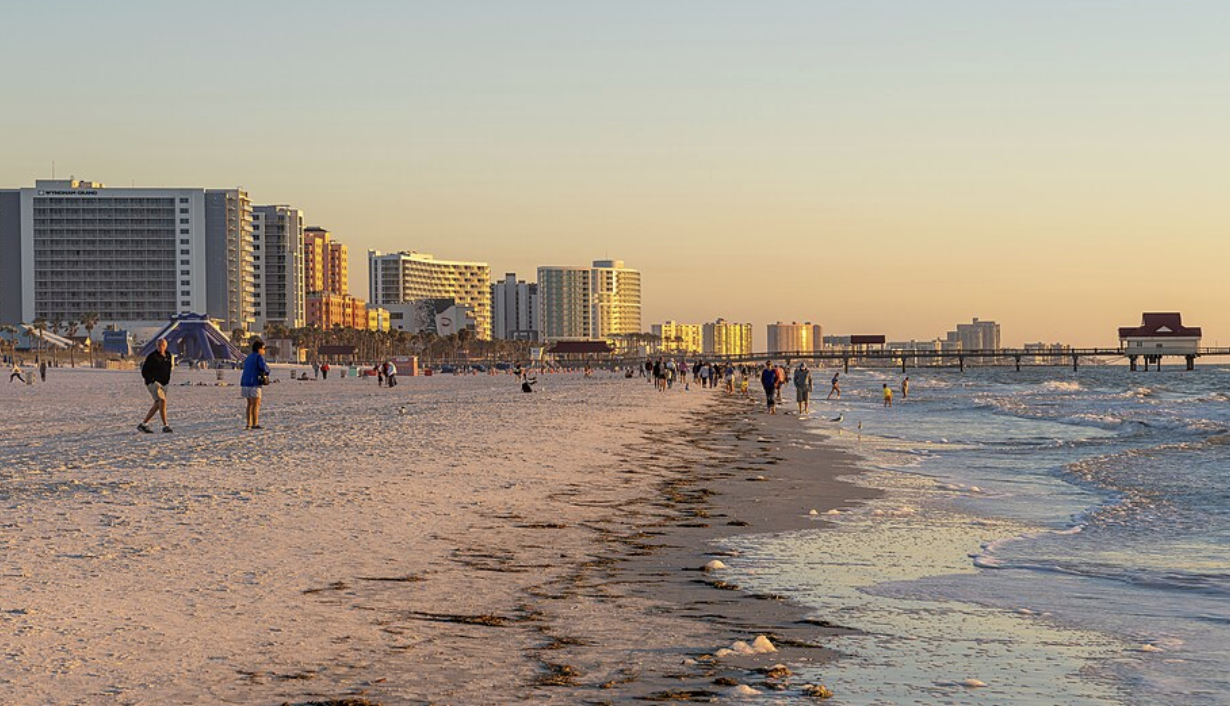
Clearwater Beach serves as the primary commercial hub of the region, anchored by the iconic Pier 60. This 1,080-foot fishing pier hosts daily “Sunsets at Pier 60” festivals, featuring local artisans and street performers. The beach is characterized by its wide, manicured shoreline and the Beach Walk, a multi-million dollar winding promenade that separates the sand from the dense corridor of hotels and restaurants. This architectural feature was designed to prioritize pedestrian traffic and offers a seamless transition from the urban environment to the Gulf.
Parking is a significant logistical hurdle here; the municipal lots, such as the Pier 60 lot (141 spaces) and the North Beach Parking Plaza (700 spaces), frequently reach capacity by 10:30 AM on weekends. Rates for on-street parking generally sit at $3.50 to $4.00 per hour, while private garages may charge flat daily rates exceeding $30.00. To mitigate these costs, many residents utilize the Clearwater Ferry, which departs from downtown Clearwater and arrives at the beach marina in approximately 20 minutes, bypassing the congested Memorial Causeway bridge.
The beach environment is highly regulated to maintain its status. Alcohol is strictly prohibited on the public sand, and smoking is limited to designated areas. While the central area near the pier is high-energy and often crowded, travelers seeking a quieter experience can walk north toward the residential Mandalay Point. Locally, the beach is famous for its “Grouper Sandwich” culture, with Frenchy’s Rockaway Grill serving as a landmark institution since 1981, situated directly on the Gulf.
Differentiating detail: This is the only beach in the list with a permanent 1,000-foot commercial fishing pier and a paved winding beach promenade (Beach Walk).
Best for: Families, social groups, and travelers who want proximity to high-end resorts and walkability to restaurants.
Who should skip: Those seeking quiet isolation or anyone who finds heavy traffic and large crowds (averaging millions of visitors annually) stressful.
🏨 St. Pete Beach
| Type | Resort-Centric Beach |
|---|---|
| Location | |
| Hours | 24 hours (Access points) |
| Price / Fee | $3.25/hour (Public Meters) |
| Phone | (727) 367-2735 |
| Website | https://www.stpetebeach.org |
St. Pete Beach is defined by its wide coastal footprint and the towering presence of The Don CeSar, known as the “Pink Palace.” Opened in 1928, this historic hotel remains the geographical and cultural anchor of the island. The beach here is notably wider than Clearwater, offering more space for visitors even during peak periods. The city was incorporated in 1957 and has successfully balanced a mix of large-scale resorts and smaller, mid-century “mom-and-pop” motels that maintain a vintage Florida aesthetic.
Transportation to this area was revolutionized by the SunRunner, Tampa Bay’s first Bus Rapid Transit system. This hybrid-electric bus runs in dedicated lanes from Downtown St. Petersburg to the beach every 15 to 30 minutes, allowing visitors to avoid the $3.25 per hour parking fees at public lots like Upham Beach. Upham Beach is also unique for its four wooden boardwalks and “secret” rock jetty, which is one of the few places in the county where small waves occasionally allow for surfing.
The northern end of the beach features Blind Pass, a channel separating St. Pete Beach from Treasure Island, which is a popular spot for watching dolphins and manatees. The atmosphere is generally more relaxed than Clearwater, with a slightly older demographic and a focus on long-term vacationers. A locally specific insight is the Corey Avenue District, located just a few blocks from the shore, which hosts a significant Sunday market and features independent galleries that pre-date the modern resort boom.
Differentiating detail: It offers the best public transit connectivity in the region via the SunRunner BRT and features the most iconic historic architecture (The Don CeSar).
Best for: History buffs, resort travelers, and those staying in Downtown St. Pete who want a car-free commute.
Who should skip: Budget travelers who find the resort-heavy shoreline too commercialized or expensive for dining.
🏰 Fort De Soto Park

| Type | County Park / Historic Site |
|---|---|
| Location | |
| Hours | 7:00 AM – Sunset |
| Price / Fee | $5.00 entry fee |
| Phone | (727) 582-2100 |
| Website | https://pinellas.gov/parks/fort-de-soto-park |
Fort De Soto Park is a sprawling 1,136-acre preserve spread across five interconnected islands (keys). It is entirely devoid of commercial development, meaning there are no hotels, high-rises, or private residences within its borders. The park is home to Battery Louis and Battery Adair, historic military installations built in 1898 during the Spanish-American War. Visitors can explore the mortar batteries and the rooms of the fort, which remain largely intact, offering a panoramic view of the Sunshine Skyway Bridge from the top of the ramparts.
The park is divided into distinct zones: North Beach, East Beach, and the Dog Beach. North Beach is frequently cited for its natural beauty due to a large sandbar that creates a calm, shallow lagoon perfect for wading. East Beach is generally quieter and offers a direct view of the shipping channels entering Tampa Bay. A $5.00 parking fee is collected at the entrance, and travelers must also factor in approximately $1.75 in tolls on the Pinellas Bayway to reach the park.
Amenities include a 238-site campground, seven miles of paved bicycle trails, and two large fishing piers (one on the Gulf and one on the Bay). For those interested in local history, the park was used for bombing practice during WWII; notably, the pilot of the Enola Gay practiced missions over these keys. Because there are no restaurants in the park—only small snack concessions—it is highly recommended to pack a cooler. The park also serves as the departure point for the ferry to Egmont Key State Park, a nearby island only accessible by boat.
Differentiating detail: This is a protected wilderness area with no commercial buildings and an intact 19th-century coastal defense fort.
Best for: Nature enthusiasts, history lovers, dog owners (off-leash beach area), and campers.
Who should skip: Travelers who want the convenience of beachside bars, shops, or air-conditioned restaurants within walking distance.
🐚 Honeymoon Island State Park

| Type | Florida State Park |
|---|---|
| Location | |
| Hours | 8:00 AM – Sunset |
| Price / Fee | $8.00 per vehicle |
| Phone | (727) 241-6106 |
| Website | https://www.floridastateparks.org |
Located at the northern end of the Pinellas barrier chain in Dunedin, Honeymoon Island State Park offers four miles of shoreline and three miles of inland nature trails. The park earned its name in 1939 when a developer held a contest for newlyweds, turning the island into a destination for honeymooners. Today, it is the most visited state park in Florida, attracting over one million visitors annually. The beach varies from soft sand in the Oasis area to rocky, shell-strewn stretches further north, making it a premier destination for shelling, particularly after a cold front.
A major draw of this location is the Caladesi Connection ferry, which departs from the Honeymoon Island docks and transports visitors to Caladesi Island State Park. Caladesi is one of the few remaining completely natural islands on the Gulf Coast and is only accessible by boat. The ferry ride takes about 20 minutes and costs approximately $20 for adults. On Honeymoon Island itself, the Osprey Trail provides a rare opportunity to see nesting ospreys, great horned owls, and gopher tortoises in a virgin slash pine forest.
Logistically, the park is accessed via the Dunedin Causeway, a popular spot for kayak and jet ski rentals. Parking is included in the $8.00 vehicle entry fee, but the lots can fill quickly during the “snowbird” season (January–April). Unlike the southern beaches, Honeymoon Island has a more rugged feel with tide pools and shorebird nesting zones. Visitors should be aware that the north end of the beach is a designated “Pet Beach,” though dogs must remain on a 6-foot leash at all times, unlike the off-leash area at Fort De Soto.
Differentiating detail: It provides ferry access to the road-less Caladesi Island and features a virgin slash pine forest trail for birdwatching.
Best for: Shell collectors, birdwatchers, and those who want a blend of beach time and forest hiking.
Who should skip: People with mobility issues who may struggle with the rocky shoreline or those looking for deep, manicured “sugar” sand for laying out.
🏡 Pass-a-Grille Beach

| Type | Historic Residential District |
|---|---|
| Location | |
| Hours | 24 hours (Access points) |
| Price / Fee | $3.25/hour (Metered) |
| Phone | Not available |
| Website | https://www.visitstpeteclearwater.com |
Pass-a-Grille constitutes the southernmost end of St. Pete Beach and is a designated National Historic District. This community successfully resisted the high-rise development that characterized the 1970s and 80s in other parts of Florida, preserving its “Old Florida” charm. The district is only one block wide, meaning you are never more than a few hundred feet from either the Gulf of Mexico or the Boca Ciega Bay. The architecture is dominated by 1920s-era cottages and the historic 8th Avenue, which is recognized as the shortest “main street” in the U.S. with commercial shops.
Parking is entirely metered along Gulf Way, with no large parking garages available. This limits the number of visitors and helps maintain a quiet, boutique atmosphere. A unique local tradition occurs at the Paradise Grille, where a bell is rung exactly at sunset every evening. The beach here is pristine, with a steeper drop-off into the water than at Clearwater, making it a favorite for swimmers. Because the area is residential, the crowds are typically local or composed of repeat visitors staying in small guesthouses.
The Merry Pier on the bay side serves as a hub for deep-sea fishing charters and the shuttle to Shell Key, an uninhabited barrier island. Visitors can also explore the Gulf Beaches Historical Museum, housed in the first church built on the barrier islands (1917), which documents the history of the region’s pioneers. A specific local insight: the rooftop of the Hurricane Seafood Restaurant offers the best 360-degree view of the island, though it is one of the more tourist-heavy spots in an otherwise quiet neighborhood.
Differentiating detail: This is a National Historic District with no high-rises, featuring a one-block-wide peninsula layout.
Best for: Couples seeking a romantic setting, fans of boutique shopping, and travelers who prefer “Old Florida” aesthetics over modern resorts.
Who should skip: Families looking for large playgrounds and arcades, or groups wanting a high-energy “spring break” party environment.
🗓 Best Time / Tips
✅ When to go
- March to May: This is the prime window for weather, with temperatures averaging 75°F to 85°F. However, be mindful of Spring Break (late March), which brings maximum crowds and tripled hotel rates.
- October to November: The humidity drops significantly during these months, the water remains warm enough for swimming, and the summer storm season tapers off.
- Avoid August/September: This is the peak of hurricane season and humidity. It is also the most common time for “Red Tide” (harmful algal blooms) to affect the coast.
- Weekday Mornings: To secure parking in Clearwater or Pass-a-Grille, aim to arrive before 9:30 AM.
⚠️ Quick tips
- Do the Stingray Shuffle: From May to October, stingrays frequent the shallow waters. Always shuffle your feet in the sand when entering the water to vibrate the ground and warn them of your presence.
- Download Parking Apps: Most beaches in Pinellas County use the ParkMobile app. Pre-loading your license plate and credit card info will save you significant time at the kiosks.
- Check the Red Tide Status: Before heading out, check the Mote Marine Laboratory beach report online to ensure there are no active respiratory irritants or dead fish in the area.
- SunRunner is Your Friend: If you are staying in Downtown St. Petersburg, the SunRunner bus is significantly cheaper and faster than driving and paying for beach parking.
Frequently Asked Questions
Can you drink alcohol on Tampa Bay beaches?
Generally, no. Alcohol is prohibited on almost all public beaches, including Clearwater Beach, Fort De Soto, and Honeymoon Island. Some resorts on St. Pete Beach allow alcohol for their guests within a designated permit area on the sand, but possession of open containers by the general public is strictly enforced by local police.
How do I know if there is Red Tide?
Red Tide (Karenia brevis) is an algal bloom that can cause respiratory irritation and fish kills. You should consult the Florida Fish and Wildlife Conservation Commission (FWC) daily sampling map or the Visit St. Pete-Clearwater beach status dashboard, which provides real-time updates on water clarity and air quality.
Which beach is best for finding shells?
Honeymoon Island State Park is widely considered the best for shelling, particularly at its northern tip. The lack of commercial development and its geographical position allow it to catch more shells than the manicured shores of Clearwater or St. Pete Beach.
Is parking expensive?
Expect to pay between $3.25 and $4.00 per hour at municipal lots. Private lots in Clearwater Beach can reach $30-$40 for a full day. Fort De Soto is the most economical option at a flat $5.00 entry fee for the entire day.
Are there sharks in the water?
While sharks are present in the Gulf of Mexico, attacks on humans are extremely rare in this region. The most common marine concern for swimmers is actually stingrays and occasional man-o-war jellyfish during certain wind patterns.
Leave a Reply