
Tracing the Roots: A Guide to Nashville’s Essential Music History Sites
Nashville earned the moniker “Music City” through decades of pioneering recording sessions, legendary live broadcasts, and unparalleled songwriting talent. For music enthusiasts traveling to Tennessee, understanding the city’s profound influence on the American soundtrack requires stepping beyond the crowded honky-tonks of Lower Broadway. The true character of Nashville’s music scene is preserved inside its historic auditoriums, unassuming recording studios, and intimate listening rooms.
This guide highlights the five most critical institutions for understanding the evolution of country, bluegrass, and roots music in Nashville. From the massive archival collections in the downtown museum district to a quiet strip mall in Green Hills where chart-topping hits are born, these locations provide a chronological and emotional map of how Nashville shaped modern music.
🏛️ Country Music Hall of Fame and Museum

| Type | Museum |
|---|---|
| Location | |
| Hours | Daily 9:00 AM – 5:00 PM |
| Price / Fee | $31.95 (Adults) / $21.95 (Youth) |
| Phone | (615) 416-2001 |
| Website | countrymusichalloffame.org |
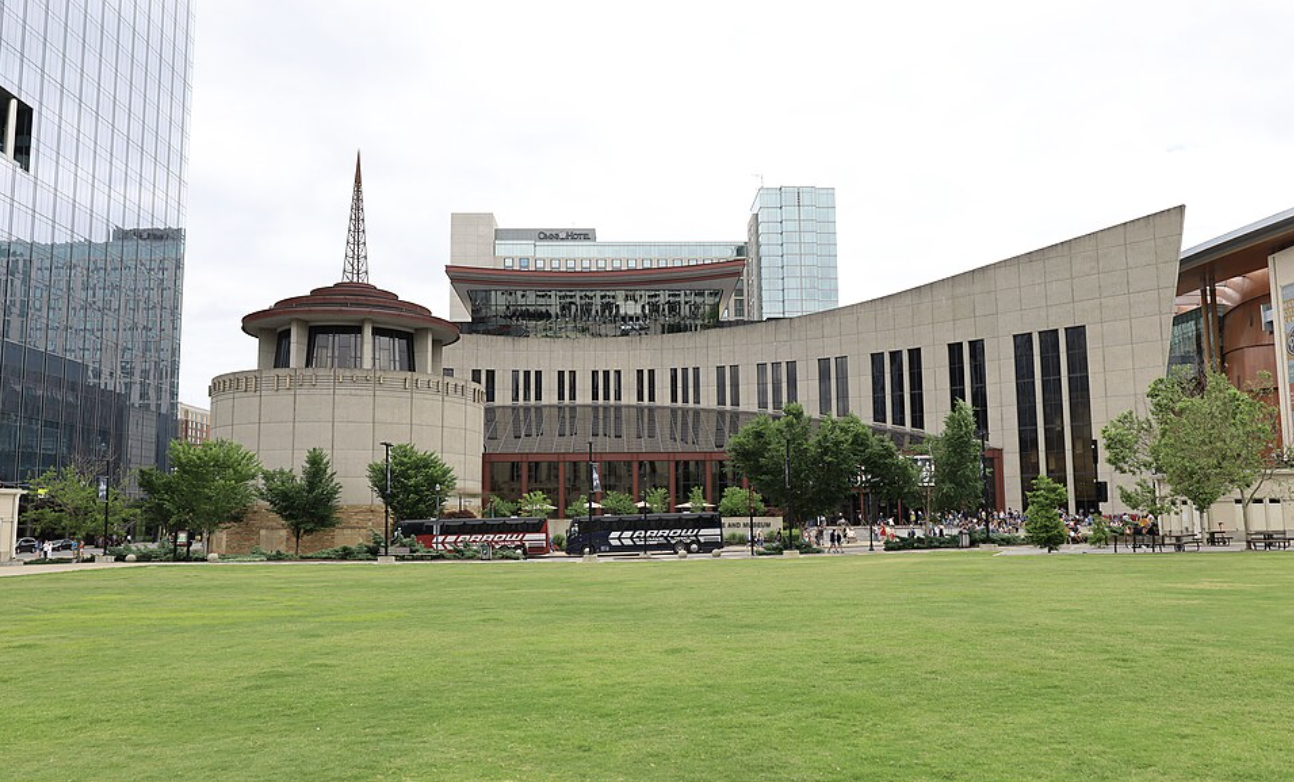
Dominating the downtown skyline with an architectural design that incorporates a massive bass clef and windows resembling piano keys, the Country Music Hall of Fame and Museum serves as the definitive encyclopedia of the genre. As the largest repository of country music artifacts in the world, the institution houses over 2.5 million items. Visitors walk through decades of history, tracing the genre from its rural, 19th-century folk roots to its current status as a global commercial powerhouse.
The self-guided layout requires at least two hours to absorb the sheer volume of memorabilia on display. Notable pieces include Hank Williams’ cherished Martin guitar, Elvis Presley’s solid gold Cadillac, and a rotating collection of stage costumes ranging from Johnny Cash to Taylor Swift. The exhibits are highly text-driven but balanced by excellent interactive audio stations and archival video footage that demonstrate how regional sounds evolved into the modern industry.
The emotional climax of the facility is the Hall of Fame Rotunda, a serene, cylindrical room displaying the bronze plaques of every inducted member. It is intentionally designed without a start or end point, symbolizing the unbroken circle of the country music community. Because it is located just blocks from Broadway, it acts as an ideal starting point for a music history tour before diving into the live venues.
Best for: Factual history buffs, fans of vintage instruments, and travelers wanting a comprehensive overview of the genre’s evolution.
🪑 Ryman Auditorium

| Type | Historic Music Venue |
|---|---|
| Location | |
| Hours | Daily 9:00 AM – 4:00 PM (Tour Hours) |
| Price / Fee | Tours start around $30.00 |
| Phone | (615) 889-3060 |
| Website | ryman.com |
Originally constructed in 1892 as the Union Gospel Tabernacle, the Ryman Auditorium is universally revered as the “Mother Church of Country Music.” The building served as the primary home of the Grand Ole Opry from 1943 until 1974, hosting the debuts of countless legends, including the fateful night when a young Johnny Cash met June Carter backstage. Its curved pew seating and stained-glass windows retain a distinctly reverent atmosphere.
During the day, the venue operates as a museum offering both self-guided and guided backstage tours. Visitors can stand on the original oak stage where Patsy Cline and Hank Williams once performed, look out over the curved wooden pews, and explore the dressing rooms. The tour begins with a highly produced introductory film that effectively contextualizes the building’s brush with demolition in the 1990s and its subsequent restoration.
Beyond its history, the Ryman is currently one of the most prestigious active concert venues in the United States, famous for acoustics that draw artists from rock, pop, and indie genres. If your schedule allows, booking tickets for an evening concert here provides a far more authentic understanding of the room’s magic than a daytime tour alone.
Best for: Architecture enthusiasts, live music purists, and those who want to stand in the exact footprints of country music pioneers.
🎙️ Historic RCA Studio B

| Type | Historic Recording Studio |
|---|---|
| Location | |
| Hours | Daily 10:30 AM – 3:30 PM (Tour Departures) |
| Price / Fee | $54.95 (Includes Hall of Fame Admission) |
| Phone | (615) 416-2001 |
| Website | countrymusichalloffame.org/experiences/studio-b |
Situated in the heart of the Music Row district, Historic RCA Studio B is a humble, unassuming concrete building that fundamentally altered the trajectory of American recording arts. It is widely credited as the birthplace of the “Nashville Sound,” a polished production style characterized by background vocals and lush strings that revived country music’s commercial viability during the rise of rock and roll in the late 1950s and 60s.
Access to Studio B is exclusively available via guided tours that depart by shuttle from the Country Music Hall of Fame. Inside the studio, knowledgeable guides detail the history of the “A-Team”—the legendary session musicians who rapidly recorded over 35,000 songs within these walls for artists like Dolly Parton, Roy Orbison, and the Everly Brothers. The space remains frozen in time, right down to the retro mood lighting installed specifically at Elvis Presley’s request.
The highlight of the tour is standing in the acoustic “sweet spot” marked by a blue X on the linoleum floor, where vocalists stood to record their tracks. Guides often dim the lights and play the original studio recordings of songs like “Are You Lonesome Tonight,” allowing visitors to hear the room’s natural reverberation exactly as it sounded on the record.
Best for: Audiophiles, Elvis Presley fans, and anyone fascinated by the technical history of music production and session musicians.
📻 Grand Ole Opry House

| Type | Live Music Venue / Radio Broadcast |
|---|---|
| Location | |
| Hours | Box Office Daily 9:00 AM – 5:00 PM; Showtimes vary |
| Price / Fee | Ticket prices vary by performance |
| Phone | (615) 889-3060 |
| Website | opry.com |
Located roughly twenty minutes east of downtown in the Music Valley neighborhood, the Grand Ole Opry House is the current permanent headquarters for the show that made country music famous. While it lacks the 19th-century architecture of the Ryman, it represents the modern continuation of the longest-running radio broadcast in United States history. A six-foot circle of dark oak wood, cut directly from the Ryman stage, sits center stage here so that modern artists can literally stand on the shoulders of the founders.
Attending an Opry show is entirely different from a standard concert. True to its radio origins, the format features multiple artists—ranging from newly inducted contemporary stars to absolute legends in their eighties—each performing short, three-song sets. This variety-show structure ensures a fast-paced evening that showcases the past, present, and future of the genre simultaneously.
For visitors interested in the mechanics of live production, the Opry offers highly rated backstage tours. These walkthroughs allow guests to see the individually themed dressing rooms, observe the chaotic energy of the stage wings, and learn about the strict, invitation-only process of becoming an official Opry member.
Best for: Families looking for wholesome evening entertainment and travelers wanting to see a wide variety of artists in a single night.
🎸 The Bluebird Cafe
| Type | Live Music Venue / Listening Room |
|---|---|
| Location | |
| Hours | Evenings (Typically opens at 5:00 PM) |
| Price / Fee | Varies ($5-$30 cover) + $15 minimum |
| Phone | (615) 383-1461 |
| Website | bluebirdcafe.com |
Tucked inconspicuously into a strip mall in the affluent Green Hills neighborhood, The Bluebird Cafe is a globally recognized sanctuary for the craft of songwriting. Far removed from the neon lights and cover bands of downtown, this 90-seat room earned legendary status as a proving ground where artists like Taylor Swift and Garth Brooks were discovered. The focus here is strictly on the creators of the music, not the commercial performers.
The venue is famous for pioneering the “writers in the round” format. During these shows, three or four songwriters sit facing one another in the center of the room, taking turns playing acoustic versions of the massive hits they wrote for other famous artists. They share the raw, personal stories and creative processes behind the lyrics, creating a deeply intimate and often emotional experience for the audience.
Attending a show at The Bluebird requires meticulous planning. The tiny capacity means that reservations, which open online exactly one week in advance at 8:00 AM CST, sell out in minutes. Guests should also be prepared for a strict “shh” policy during performances and a mandatory $15 per person food or drink minimum, emphasizing that this is a dedicated listening room rather than a traditional bar.
Best for: Lyric lovers, aspiring writers, and those seeking a quiet, highly emotional acoustic music experience.
🗓 Best Time / Tips
✅ When to go
- Spring (April – May) and Fall (September – October): The weather is mild, making walking between downtown venues like the Hall of Fame and the Ryman much more comfortable.
- Mid-week mornings: Museum crowds peak heavily on weekends. Visiting the Country Music Hall of Fame right at its 9:00 AM opening on a Tuesday or Wednesday provides the quietest experience.
- CMA Fest week (June): If you want absolute immersion, the city is packed with artists and events, but expect maximum crowds, sold-out venues, and premium hotel pricing.
⚠️ Quick tips
- Book the Bluebird exactly on time: Set an alarm for 8:00 AM CST one week prior to your desired date. Tickets vanish in seconds.
- Bundle your tickets: You must purchase the Studio B tour through the Country Music Hall of Fame. Buying the combined ticket in advance guarantees your time slot on the shuttle.
- Mind the transit: While the Ryman and Hall of Fame are walkable from downtown hotels, the Grand Ole Opry is in Music Valley and The Bluebird is in Green Hills. You will need a rental car or a rideshare to reach them.
- Embrace the listening room rules: Venues like The Bluebird Cafe strictly enforce silence during performances. Do not treat it like a background-music bar.
Frequently Asked Questions
Do I need to be a fan of country music to enjoy these places?
Not necessarily. While a casual appreciation helps, the Ryman Auditorium and Studio B are fascinating from a pure architectural and audio-engineering perspective. Learning about the session musicians at Studio B appeals to anyone interested in mid-century American history and the recording arts.
Can I just walk up and buy tickets on the day of my visit?
It is highly discouraged. Studio B tours have strict capacities due to shuttle sizes, and the Ryman’s backstage tours frequently sell out during peak tourism months. The Bluebird Cafe is virtually impossible to access without an advance reservation, though they occasionally offer a tiny handful of first-come, first-served pew seats at the door for those willing to wait in line for hours.
Is there a dress code for attending the Grand Ole Opry or The Bluebird Cafe?
Nashville is notoriously casual. Jeans, boots, and casual shirts are perfectly acceptable at both the Grand Ole Opry and The Bluebird Cafe. You will see everything from sequined jackets to simple t-shirts, so dress comfortably, especially since you will likely be navigating venue stairs or sitting in close quarters.
How long should I budget for the downtown music history sites?
If you plan to do the Country Music Hall of Fame, the Studio B add-on tour, and a Ryman Auditorium daytime tour, expect this to consume an entire day (roughly 5 to 6 hours of actual activity, plus time for lunch and walking). Do not try to rush these three into a half-day schedule.
Would you like me to help you map out the driving routes and approximate rideshare costs between the downtown sites and the outer neighborhoods like Green Hills and Music Valley?
Leave a Reply