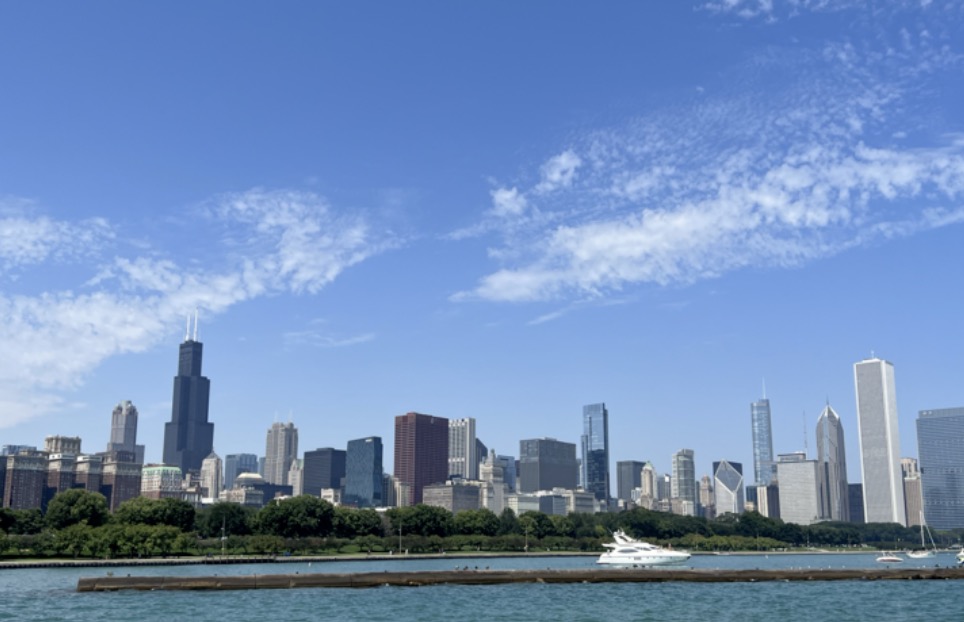

Chicago Neighborhood Guide: Car-Free Stays for First-Timers
Chicago is one of the few U.S. cities where not having a car is actually a competitive advantage. Between the iconic “L” train system and a highly walkable downtown grid, a vehicle often becomes a $70-per-night parking liability rather than a tool for exploration. For a first-time visitor, the “best” neighborhood isn’t just about the hotel—it’s about proximity to a 24-hour train line and the ability to reach Millennium Park or the Riverwalk on foot.
To maximize your time, you need to choose between the high-energy density of River North, the museum-centric Loop, or the local charm of the North Side. Each offers a distinct logistical profile for those relying entirely on the Chicago Transit Authority (CTA) and their own two feet.

| Short answer | River North or The Loop are the most practical bases for car-free first-timers. |
|---|---|
| Best for | Sightseers, architecture fans, and foodies who want 10-minute walkability to major landmarks. |
| Not ideal for | Travelers seeking quiet, residential vibes or those on a strict “motel-style” budget. |
| Bottom line | Stay in River North for nightlife and dining, or The Loop for proximity to museums and every “L” line. |
Choosing a neighborhood in Chicago requires balancing transit connectivity with after-hours safety and amenity density. Most first-timers will find the greatest “bang for buck” in terms of convenience by staying within a few blocks of the Chicago River, where the city’s tourism infrastructure is most concentrated.
✅ When it makes sense
- You are arriving via O’Hare (ORD) or Midway (MDW): The Blue and Orange lines go directly into the city center for $5 or less.
- You prioritize “The Bean” and Museums: Staying in the Loop or South Loop puts you within a 15-minute walk of the Art Institute and Museum Campus.
- You want the “Skyline Experience”: River North and Streeterville offer the highest concentration of high-rise hotels with city views.
- You enjoy late-night dining: River North and the West Loop are walkable hubs for world-class restaurants that stay open late.
🚫 When it doesn’t
- You have significant mobility issues: While many “L” stations are accessible, some older platforms require long flights of stairs; buses are generally better but slower.
- You are staying more than 3 miles from the Loop: Without a car, outlying neighborhoods can feel isolated if they aren’t directly on a Red or Blue line “L” stop.
- You have a massive amount of luggage: Navigating turnstiles and crowded train cars with more than two large bags is notoriously difficult.
🧠 Reality check (what most travelers miss)
Many visitors assume The Loop is the center of the action 24/7. In reality, the Loop is Chicago’s financial district; it can feel eerily quiet and “empty” on weekends and after 7:00 PM once the office workers go home. While it is very safe due to high security and lighting, it lacks the “street life” energy found just across the river.
Another common pitfall is overestimating the Blue Line’s speed from O’Hare. While it is the most reliable way to avoid highway gridlock, the journey takes about 45–50 minutes to reach downtown. If your hotel isn’t within a 5-minute walk of a station, factor in an additional “last mile” transit or rideshare cost.
The “Heart of Action” Strategy
| Who this fits | First-time visitors who want to see 75% of the “must-sees” on foot. |
|---|---|
| What to do | Book a hotel in River North or Streeterville. |
| Watch-outs | Street noise (sirens) can be intense; prices for basic breakfast/coffee are inflated. |
| Local tip | The Grand Avenue Red Line station is your gateway to the rest of the city. |
River North is the city’s primary hotel hub for a reason. From here, you can walk to the Magnificent Mile for shopping, the Riverwalk for architecture tours, and across the bridges into the Loop for the parks. It is the most “vibrant” area at night.
Staying here means you rarely need the train for your “main” activities. If you do want to head to a Cubs game at Wrigley Field or explore the nightlife in Boystown, the Red Line runs right through the center of the neighborhood and operates 24/7.
The “Transit Nexus” Strategy
| Who this fits | Travelers planning to explore multiple far-flung neighborhoods (Wicker Park, Chinatown, etc.). |
|---|---|
| What to do | Stay in The Loop, specifically near the Clark/Lake or State/Lake stations. |
| Watch-outs | Limited grocery stores and casual “cheap eats” compared to residential areas. |
| Local tip | Check out the Chicago Cultural Center—it’s free and has the world’s largest Tiffany dome. |
The Loop is the only place in the city where every single “L” line converges. If you stay near Clark/Lake, you have a one-seat ride to both airports (Blue and Orange lines) and direct access to the Green, Pink, and Brown lines for exploring the West Loop or North Side.
While the atmosphere is more corporate, you are steps away from the Theatre District and the city’s most famous architecture. It is the most efficient base for a “power traveler” who wants to minimize transfer times between different parts of the city.
The “Local Vibe” Strategy
| Who this fits | Visitors who prefer tree-lined streets, local coffee shops, and a quieter pace. |
|---|---|
| What to do | Look for boutique hotels or rentals in Lincoln Park or Old Town. |
| Watch-outs | Hotels are rarer here; you will be reliant on the Brown/Purple or Red lines for every downtown trip. |
| Local tip | The Lincoln Park Zoo is free and located right within the neighborhood’s namesake park. |
Lincoln Park offers a stark contrast to the glass-and-steel canyons of downtown. It is incredibly walkable, safe, and borders the lakefront. You’ll find families, joggers, and students from DePaul University here.
The trade-off is travel time. A commute from the Fullerton or Armitage stations to the Loop takes about 15–20 minutes. However, for many first-timers, the trade-off is worth it for the “Gold Coast” architecture and the ability to walk to the lakefront trails.
⚖️ Quick comparison
| Option A | The Loop (Central & Transit-Heavy) |
|---|---|
| Option B | River North (Lively & Walkable) |
| Best pick if… | Choose The Loop for museum access; River North for food and nightlife. |
The Loop is essentially the “lobby” of Chicago—great for getting in and out. River North is the “living room”—where you actually want to spend your evening hours. Most tourists find River North slightly more enjoyable for a 3-day stay despite the higher noise levels.
🎯 Final recommendation
For a first-time visitor without a car, River North is the gold standard. It provides the most “Chicago” experience with immediate access to the river, the best restaurants, and the most reliable transit line (the Red Line). You can walk to 80% of what you likely want to see, and the remaining 20% is a short train ride away.
If you find River North too expensive, look at the South Loop near Grant Park. It is slightly quieter but offers excellent access to the “Big Three” museums (Field, Shedd, and Adler) and is generally more budget-friendly while still being car-free compatible.
Frequently Asked Questions
Is it safe to use the “L” train at night?
Generally, yes, especially on the Red and Blue lines which run 24/7. However, after 10:00 PM, cars become more sparsely populated. A common local tip is to sit in the front car near the operator. For very late nights (post-midnight), many visitors prefer a quick Uber or Lyft for door-to-door peace of mind.
How do I pay for the train and bus?
You do not need a physical Ventra card. You can tap any contactless credit card or mobile wallet (Apple/Google Pay) directly at the turnstiles and on buses. A single ride is typically $2.25 to $2.50, but a 3-day or 7-day pass (available via the Ventra app or machines) is the most cost-effective for tourists.
Which area has the most expensive parking?
The Loop and River North have the highest parking rates, often exceeding $60–$75 per day at hotels. This is why staying in these areas without a car is highly recommended. If you must have a car, use apps like SpotHero to find off-site garages for significantly lower rates.
Can I walk from the Loop to River North?
Yes, they are separated only by the Chicago River. Crossing any of the iconic drawbridges (like Michigan Ave or State St) takes about 5 minutes. The walk from Millennium Park (Loop) to the start of the Magnificent Mile (River North) is approximately 10–15 minutes.
Leave a Reply