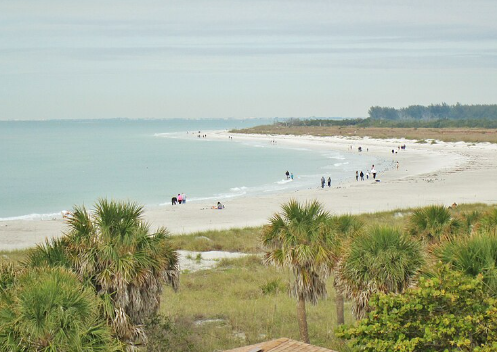

Gulf Coast Gold: 5 Essential Tampa Bay Itineraries
The Tampa Bay coastline serves as the primary gateway to Florida’s Gulf Coast, characterized by barrier islands that buffer the mainland from the open Gulf of Mexico. These beaches are world-renowned for their quartz-rich white sand, which remains cool to the touch even in the height of July. In 2026, the region continues to dominate national rankings, with three local shorelines recently named among the top ten in the United States by major travel platforms. Each location offers a distinct urban or natural profile, ranging from the high-energy boardwalks of Clearwater to the ecological preserves of Dunedin.
Planning a coastal visit in Pinellas County requires navigating a complex landscape of parking permits, seasonal tides, and ongoing environmental restoration efforts following the 2024 storm season. While the major resorts offer convenient access, the most rewarding experiences often lie in understanding the nuances of local transit like the Suncoast Beach Trolley or the timing of state park ferry services. This guide analyzes five premier coastal destinations in the Tampa Bay area to help you select the environment that aligns with your specific logistical needs and aesthetic preferences.
🏝️ Clearwater Beach

| Type | High-energy Resort Beach |
|---|---|
| Location | |
| Hours | 6:00 AM – 11:00 PM (Public Lots) |
| Price / Fee | $3.50/hour (Parking Metered) |
| Phone | (727) 562-4700 |
| Website | https://www.myclearwater.com/ |
Consistently ranked as one of the top shorelines in the nation, Clearwater Beach is the epicenter of the region’s tourism industry. The beach is anchored by Pier 60, a 1,080-foot fishing pier that hosts nightly sunset festivals featuring local artisans and street performers. The sand here is exceptionally fine and bright, a result of millions of years of Appalachian quartz sediment being pushed down the peninsula. The shoreline is expansive, often exceeding 200 feet in width from the dunes to the water line, providing ample space for massive crowds during peak Spring Break and summer months.
Logistically, Clearwater is the most challenging beach to access by car. The Clearwater Memorial Causeway often experiences significant congestion, with travel times from the mainland stretching to 45 minutes during weekend afternoons. Parking is notoriously scarce; the municipal lots, such as the 141-space Pier 60 lot, typically fill by 9:00 AM. Visitors are encouraged to utilize the Clearwater Ferry from downtown Clearwater or the Jolley Trolley to bypass traffic and avoid the hunt for a $3.50-per-hour parking spot.
The surrounding neighborhood is densely packed with high-rise hotels, seafood institutions like Frenchy’s Rockaway Grill, and the Clearwater Marine Aquarium. This is a highly developed urban beach environment where the “party vibe” is prevalent. While the city maintains the sand with daily grooming, the sheer volume of visitors means low solitude. However, for those seeking immediate access to water sports, parasailing, and a variety of dining options within walking distance, Clearwater remains the standard-bearer for Florida’s Gulf Coast.
One differentiating detail: It is the only beach in the region with a nightly, year-round sunset festival and high-density urban amenities directly on the sand.
Best for: Families seeking full amenities and travelers who want a high-energy, social atmosphere with nearby nightlife.
Who might want to skip it: Travelers seeking quiet contemplation, nature photography, or a low-cost parking experience.
🛡️ Fort De Soto Park

| Type | County Park & Ecological Preserve |
|---|---|
| Location | |
| Hours | 7:00 AM – Sunset |
| Price / Fee | $5.00 Parking Fee |
| Phone | (727) 582-2100 |
| Website | https://pinellas.gov/parks/fort-de-soto-park |
Spread across five interconnected islands (keys), Fort De Soto Park is the largest park in the Pinellas County system, encompassing over 1,136 acres. Unlike the resort-heavy beaches to the north, this area is strictly protected from commercial development. As of early 2026, the park is in a state of active revitalization following late-2024 storms. While East Beach and the Boat Ramp are fully operational, potential visitors should note that North Beach has faced intermittent closures for shoreline nourishment and structural repairs to the seawalls and playgrounds.
The park’s namesake is a historic fortification built during the Spanish-American War, which remains open for self-guided tours. Visitors can climb the ramparts to view the 12-inch Mortars, the only ones of their kind remaining in North America. Beyond history, the park offers a diverse range of ecosystems including mangroves, wetlands, and hardwood hammocks. The 7-mile paved trail is a primary draw for cyclists and birdwatchers, who come to spot over 328 species of birds that have been documented on the islands.
For dog owners, Fort De Soto is home to the region’s premier Paw Playground and a dedicated section of beach where dogs are permitted off-leash in the water. This is a rare amenity in the Tampa Bay area, where most public beaches strictly prohibit pets. The parking fee is a flat $5 per vehicle, making it one of the most cost-effective beach days in the county. However, there are no grocery stores or gas stations on the islands, so visitors must pack all necessary supplies before crossing the Tierra Verde bridge.
One differentiating detail: It combines military history with a dedicated off-leash dog beach and significant ecological biodiversity.
Best for: Nature enthusiasts, history buffs, and pet owners who prefer a wilder, less commercialized coastline.
Who might want to skip it: Those who require air-conditioned indoor dining options or want to avoid the $5 entry/parking toll.
💍 Honeymoon Island State Park

| Type | Florida State Park |
|---|---|
| Location | |
| Hours | 8:00 AM – Sunset |
| Price / Fee | $8.00 per Vehicle |
| Phone | (727) 241-6106 |
| Website | https://www.floridastateparks.org/honeymoonisland |
Ranked #10 in the U.S. for 2026, Honeymoon Island State Park offers a glimpse into Florida’s “Old Coast” before the advent of high-rise condos. The park features four miles of beach, but it is particularly noted for its Osprey Trail, where visitors can view one of the last remaining virgin slash pine forests in South Florida. The shoreline here is somewhat rockier than Clearwater, particularly on the northern end, making it an excellent spot for shelling after a high tide or storm. The water is generally shallow and calm, protected by the offshore barrier of Caladesi Island.
Accessing the park is straightforward via the Dunedin Causeway, which itself allows for free parking and water activities like kayaking and kiteboarding. The state park entry fee is $8 per vehicle (up to 8 people), which includes access to the Rotary Centennial Nature Center. A significant logistical highlight is the Caladesi Connection Ferry, which departs from the island’s docks every half-hour starting at 10:00 AM. This ferry is the only public access to Caladesi Island, another top-ranked beach that is entirely undeveloped.
The crowd level at Honeymoon Island is generally medium. While the main beach areas near the concessions can become busy on weekends, a 15-minute walk north provides significant solitude. The park is well-equipped with amenities, including two large bathhouses, a café, and rental stations for umbrellas and kayaks. It is also an accessible destination, providing beach wheelchairs upon request and maintained boardwalks through the dunes. The park closes strictly at sunset, and rangers are diligent about clearing the island to protect local nesting wildlife.
One differentiating detail: It serves as the primary gateway to the remote Caladesi Island and contains a rare virgin slash pine forest.
Best for: Shell collectors, birders, and those looking to combine a beach day with a light hiking experience.
Who might want to skip it: Visitors looking for the “sugar-soft” sand found in St. Pete (Honeymoon sand can be coarse and shelly in sections).
🏖️ St. Pete Beach

| Type | Resort Town Beach |
|---|---|
| Location | |
| Hours | Dawn – Dusk |
| Price / Fee | $3.25/hour (Public Meters) |
| Phone | (727) 367-2735 |
| Website | https://www.stpetebeach.org/ |
St. Pete Beach occupies a five-mile stretch of the barrier island and is characterized by its blend of luxury resorts and mid-century “Old Florida” motels. The centerpiece of the skyline is the Don CeSar, the “Pink Palace,” which was built in 1928 and serves as a landmark for navigation. This beach is significantly wider than many others in the county, often requiring a substantial walk from the access points to the water. The sand quality is high, with a soft, powdery texture similar to Clearwater but generally experiencing slightly lower crowd densities.
For those with mobility concerns, St. Pete Beach is arguably the most accessible shoreline in the bay. The main public access point at 4700 Gulf Blvd features nine dedicated disability parking spots and multiple Mobi-Mats (synthetic mesh walkways) that extend across the dunes to provide a stable surface for wheelchairs. Two beach wheelchairs are available at the Paradise Grill, a beachfront concession stand that serves as the community hub for food, live music, and basic amenities.
Parking is managed via the ParkMobile app or on-site pay stations, with rates currently at $3.25 per hour. Traffic on Gulf Boulevard can be heavy, particularly near the Corey Avenue shopping district, but the SunRunner rapid bus transit system now provides a high-frequency link between downtown St. Petersburg and the beach, allowing visitors to avoid parking fees entirely. The water here is known for being remarkably clear during periods of low wind, often taking on a turquoise hue that rivals the Caribbean.
One differentiating detail: Features the best accessibility infrastructure in the region, including permanent Mobi-Mats and rapid bus transit (SunRunner) access.
Best for: Travelers with mobility needs, fans of historic Mediterranean Revival architecture, and those staying in the St. Petersburg area.
Who might want to skip it: Those looking for a secluded, natural environment (resorts dominate the view from the shoreline).
🏘️ Pass-a-Grille Beach

| Type | Historic District Beach |
|---|---|
| Location | |
| Hours | 8:00 AM – 8:00 PM (Enforced Parking) |
| Price / Fee | $3.25/hour |
| Phone | Not available |
| Website | https://www.pass-a-grille.org/ |
Located at the southernmost tip of St. Pete Beach, Pass-a-Grille is a National Historic District that feels worlds away from the high-rise sprawl of the main strip. There are no condos or chain hotels here; instead, the neighborhood is composed of pastel-colored cottages and small, independent boutiques. The beach itself is narrower than Clearwater or St. Pete Beach, but it offers a more intimate, local atmosphere. The 8th Avenue historic district serves as the town’s main artery, containing a handful of restaurants and the Gulf Beaches Historical Museum.
Parking in Pass-a-Grille is notoriously strict. While there are over 500 spots along Gulf Way, they are almost exclusively metered via the ParkMobile app at $3.25 per hour. A unique local tip is that 8th Avenue offers free 2-hour parking between 8:00 AM and 6:00 PM, though these spots are extremely competitive. Visitors should be careful to avoid parking in “D” permit zones, which are reserved for residents and strictly enforced by local police. Unlike the resort beaches, there are fewer public restrooms, so planning around the few available facilities near the central park is essential.
The water at Pass-a-Grille is often the calmest in the bay due to the proximity of the Shell Key shoals. It is a favorite spot for sunset viewing, as the lack of high-rise buildings allows for an unobstructed horizon. The beach also provides access to the Shell Key Shuttle, which transports visitors to a nearby uninhabited island for shelling and dolphin watching. The demographic here tends to be older and quieter, making it the preferred choice for those who want to read a book in peace rather than participate in a beach volleyball tournament.
One differentiating detail: It is a designated National Historic District with no high-rise development, preserving a 1920s seaside village aesthetic.
Best for: Couples, solo travelers, and those who appreciate boutique shopping and a low-volume acoustic environment.
Who might want to skip it: Large groups or families who need extensive public facilities like pavilions and large playgrounds.
🗓 Best Time / Tips
✅ When to go
- Spring (March – May): The ideal balance of warm water (75-80°F) and lower humidity. However, beware of Spring Break crowds in late March, which can double travel times.
- Early Morning (7:00 AM – 9:00 AM): Essential for Clearwater and St. Pete Beach to secure a parking spot and avoid the midday Florida sun.
- Weekday Sunsets: Pass-a-Grille is less crowded on Tuesday or Wednesday evenings, providing a more peaceful experience of the “green flash” sunset phenomenon.
- Winter (December – February): Excellent for birdwatching and hiking at Fort De Soto, though the Gulf water is often too cold for swimming (approx. 62-65°F).
⚠️ Quick tips
- Download ParkMobile: Almost all Tampa Bay beaches use this app for parking. Set it up before you arrive to avoid fumbling with your phone in a busy lot.
- SunRunner Transit: If staying in St. Petersburg, use the SunRunner bus to reach St. Pete Beach for a few dollars, avoiding the $25+ daily parking fees.
- Stingray Shuffle: Between April and October, shuffle your feet while entering the water to avoid stepping on stingrays that frequent the shallow Gulf waters.
- Alcohol Laws: Most public beaches in the area strictly prohibit alcohol on the sand. Check local signage to avoid fines, which can exceed $100.
Frequently Asked Questions
Is parking free at any of these beaches?
Generally, no. Most municipal beaches charge between $3.25 and $4.00 per hour. The only common “free” parking is found in the 2-hour limited spots on 8th Avenue in Pass-a-Grille or along the Dunedin Causeway (outside the state park gates).
Which beach is safest for children?
Clearwater Beach and Fort De Soto are generally the safest due to the presence of on-duty lifeguards and very shallow, gradual entries into the water. Fort De Soto’s lagoon area is particularly calm as it is protected from Gulf waves.
Are umbrellas and chairs available for rent?
Yes, but primarily at Clearwater Beach and St. Pete Beach. Rental sets typically cost between $35 and $50 per day. State parks like Honeymoon Island also offer rentals, but they are fewer in number and may sell out by noon.
How can I avoid the worst traffic?
Use the Clearwater Ferry to reach Clearwater Beach or the SunRunner for St. Pete Beach. If driving, aim to cross the bridges before 9:30 AM or after 4:00 PM to avoid the peak “day-tripper” rush.
Leave a Reply