
🎨 Chicago’s Open-Air Museum: Iconic Public Art Pieces
Chicago is not just a city of towering skyscrapers and deep-dish pizza; it is fundamentally a world-class canvas. Thanks to progressive city ordinances passed in the mid-20th century requiring a percentage of public building costs to be dedicated to art, the downtown Loop has evolved into an incredible, entirely free open-air museum. You don’t need a ticket to the Art Institute to experience masterpieces created by some of the most famous artists in modern history.
Walking through the city’s plazas feels like a scavenger hunt for monumental creativity. From colossal, rusting iron figures marching blindly through Grant Park to vibrant mosaics wrapping around concrete walls, the street-level culture here is deeply intertwined with visual arts. Whether you are an architecture buff or simply looking for the best cultural photo-ops, these are the essential public art pieces you absolutely cannot miss in Chicago.
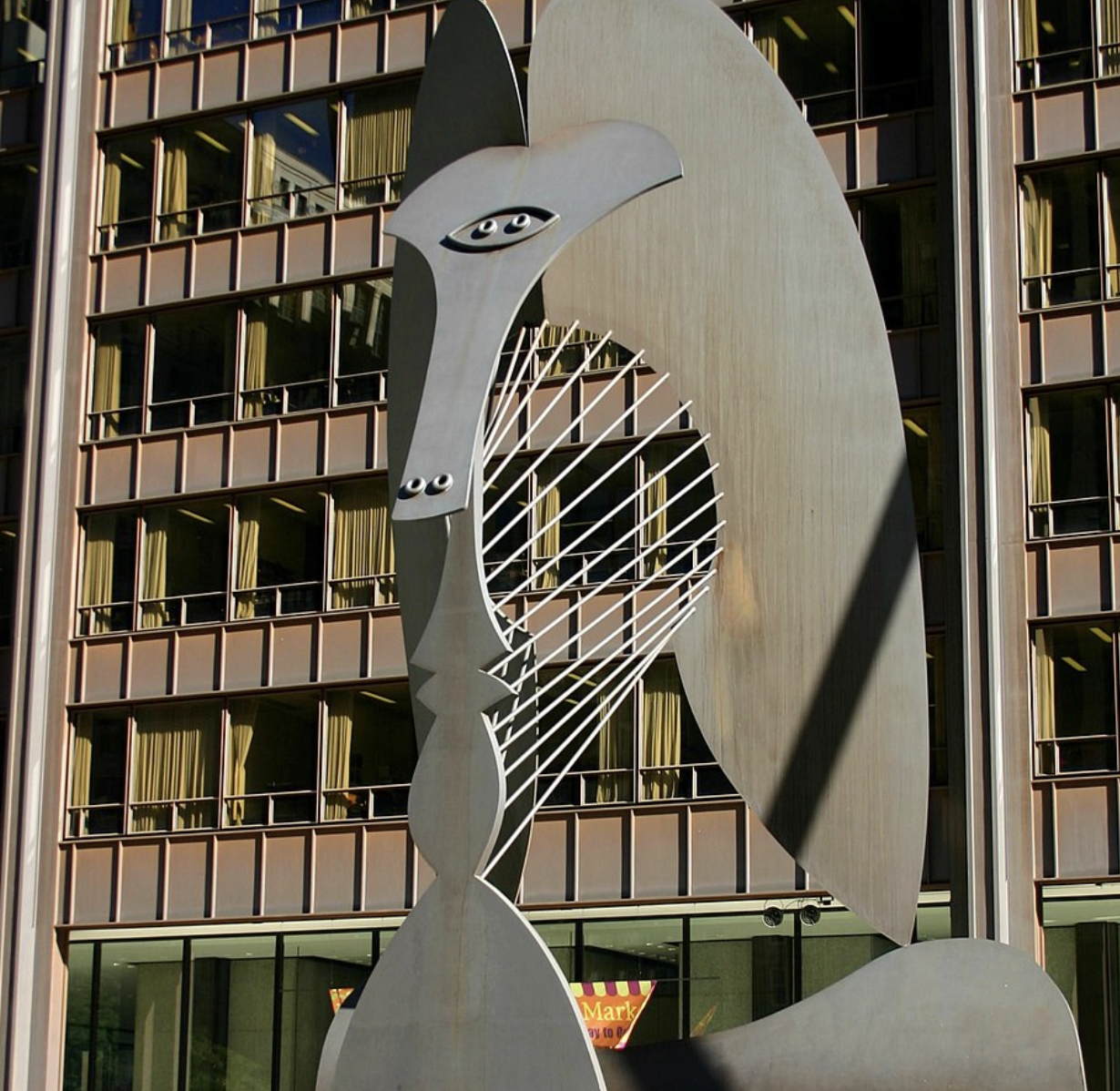
🖼️ The Picasso (Untitled)

| Type | Monumental Public Sculpture |
|---|---|
| Location | |
| Hours | Open 24/7 |
| Price / Fee | Free |
| Phone | Not available |
| Website | Not available |
Unveiled in 1967, this massive, 50-foot-tall Cor-Ten steel sculpture by Pablo Picasso was initially met with widespread confusion and controversy. Nobody, including the city’s mayor, knew exactly what it was supposed to be—an Afghan hound? A baboon? A woman’s profile? Despite the initial shock, the 162-ton untitled masterpiece radically shifted the city’s cultural landscape, paving the way for the robust public art program Chicago enjoys today.
Over the decades, The Picasso has transformed from an avant-garde oddity into a deeply beloved civic mascot. It anchors the bustling Daley Plaza and serves as a rallying point for protests, press conferences, and seasonal events like the Christkindlmarket. Because the steel was designed to naturally rust over time, it perfectly mirrors the gritty, industrial heritage of the Midwest.
One of the best things about this sculpture is how interactive the city allows it to be. Unlike delicate museum pieces behind velvet ropes, kids and adults alike are actively encouraged to touch the art. In the summer, you will frequently see children treating the sloping steel base of the sculpture as a giant, incredibly expensive playground slide.
Best for: Abstract photography, climbing with kids, and experiencing Chicago’s first major public art piece.
🦩 Flamingo

| Type | Stabile Sculpture |
|---|---|
| Location | |
| Hours | Open 24/7 |
| Price / Fee | Free |
| Phone | Not available |
| Website | gsa.gov |
Designed by the legendary American sculptor Alexander Calder and unveiled in 1974, Flamingo is a masterclass in urban contrast. Standing 53 feet tall in the center of Federal Plaza, this sprawling, arched steel structure is painted in the artist’s signature, vibrant “Calder Red.” This brilliant color was chosen specifically to offset the dark, imposing, rigid grid of the surrounding government buildings designed by Mies van der Rohe.
Unlike Calder’s famous kinetic “mobiles” that move with the wind, Flamingo is a “stabile”—a completely stationary structure that relies on its sweeping curves and massive scale to create a sense of dynamic movement. As you walk underneath its massive arches, the perspective of the surrounding skyline dramatically shifts, creating brilliant geometric framing for photographers.
The plaza itself is surprisingly quiet compared to the rest of the Loop, offering a peaceful moment to appreciate the striking architectural dialogue between the organic, swooping lines of the sculpture and the stark, black steel-and-glass towers boxing it in. It remains one of the most visually striking and successful integrations of art and architecture in the city.
Best for: Bold architectural photography, appreciating color theory, and quiet downtown contemplation.
🚶♂️ Agora

| Type | Cast Iron Installation |
|---|---|
| Location | |
| Hours | 6:00 AM – 11:00 PM Daily |
| Price / Fee | Free |
| Phone | (312) 742-3918 |
| Website | chicagoparkdistrict.com |
Located at the southern end of Grant Park, Agora is arguably the most imposing, emotionally heavy, and slightly eerie public art installation in Chicago. Created by acclaimed Polish artist Magdalena Abakanowicz, the piece consists of 106 headless, armless iron figures, each standing nine feet tall and weighing over 1,800 pounds. They appear to be marching aimlessly in various directions across the landscape.
The name “Agora” refers to the urban meeting places of Ancient Greece, but the meaning of the artwork is intentionally haunting. Growing up during World War II, Abakanowicz often used headless crowds in her art to symbolize the loss of individuality and the terrifying nature of the “mindless herd.” Walking directly through the dense, rusting iron maze of these massive torsos is a profoundly humbling and physical experience.
Over the years, the cast iron has weathered and rusted, giving the figures a textured, bark-like appearance that looks particularly striking against the green grass of the park and the towering skyline behind them. Visiting this installation on a foggy or overcast day amplifies its moody, cinematic atmosphere immensely.
Best for: Immersive and thought-provoking walks, moody photography, and history buffs.
🧩 Monument with Standing Beast

| Type | Fiberglass Sculpture |
|---|---|
| Location | |
| Hours | Open 24/7 |
| Price / Fee | Free |
| Phone | Not available |
| Website | Not available |
Affectionately nicknamed “Snoopy in a Blender” by locals, the Monument with Standing Beast is a wildly imaginative, 29-foot-tall fiberglass sculpture created by French artist Jean Dubuffet. Located right outside the glassy, spaceship-like James R. Thompson Center, this black-and-white piece is composed of four interlocking elements that resemble a standing animal, a portal, a tree, and an architectural form.
Dubuffet was a champion of “Art Brut” (raw art), drawing heavy inspiration from the unrestrained, spontaneous drawings of children and outsiders. This playful, puzzle-like aesthetic is immediately apparent. The stark black outlines and white surfaces look exactly like a massive, 3D doodle that has magically popped out of a sketchbook and onto the busy Chicago pavement.
Like the Picasso, this sculpture is entirely accessible. The interlocking shapes create an archway that pedestrians actively walk through on their daily commute. Stepping inside the structure gives you a bizarre, fragmented view of the surrounding skyscrapers, making it a fantastic spot for creative, high-contrast street photography.
Best for: Playful selfies, surrealist art appreciation, and walking inside a literal masterpiece.
🌈 The Four Seasons Mosaic

| Type | Public Mosaic |
|---|---|
| Location | |
| Hours | Open 24/7 |
| Price / Fee | Free |
| Phone | Not available |
| Website | Not available |
Tucked away in the sunken plaza beneath the sweeping curve of the Chase Tower, The Four Seasons is a breathtaking, 70-foot-long rectangular mosaic created by the legendary Russian-French artist Marc Chagall. Gifted to the city in 1974, the piece wraps entirely around four sides of a massive concrete box, requiring visitors to literally walk around the entire structure to take in the full narrative.
The mosaic is composed of thousands of tiny, brilliant glass and stone tiles in over 250 different shades. It depicts the shifting landscapes, suns, and moons of the changing seasons, alongside classic Chagall motifs like floating lovers, musicians, and birds. It brings an incredible splash of vibrant, poetic color to an otherwise grey, concrete-heavy business district.
In the 1990s, a protective glass canopy was built over the mosaic to shield it from the harsh Chicago winters and acidic rain. While the canopy slightly alters the raw viewing experience, the mosaic remains a stunning, luminous jewel hidden in plain sight. It is a favorite lunchtime retreat for downtown office workers seeking a moment of visual serenity.
Best for: Discovering hidden downtown gems, appreciating intricate tilework, and a splash of color on a grey day.
🗓 Best Time / Tips
✅ When to go
- Weekend Mornings: The downtown Loop is primarily a business district. Visiting these plazas on a Saturday or Sunday morning guarantees zero crowds and a clear background for your photos.
- High Noon for Colors: Because the buildings are so tall, the sun only hits some of the sunken plazas (like the Chagall mosaic) directly during the middle of the day, making the colors pop intensely.
- During a Snowstorm: The dark red of the Flamingo and the rusting iron of Agora look incredibly dramatic when covered in a fresh, undisturbed layer of bright white Chicago snow.
⚠️ Quick tips
- Take a walking tour: All of these pieces are within a 20-30 minute walk of each other in the Loop. Plot them on Google Maps for a fantastic, free DIY afternoon walking tour.
- Look up the history: Public art is much more engaging when you know the context. Chicagoans famously hated most of these pieces when they were first unveiled—knowing the controversy makes them much more charming.
- Respect the materials: While sliding on the Picasso is a local tradition, avoid climbing or sitting on delicate pieces like the Chagall mosaic tiles to preserve them for future generations.
Frequently Asked Questions
Are these public art pieces totally free to visit?
Yes, 100%. They are located in outdoor, public plazas and parks. You do not need to pay admission, pass through security, or adhere to strict museum hours to view any of the sculptures on this list.
Where is the famous “Bean” sculpture?
While “Cloud Gate” (The Bean) by Anish Kapoor is arguably Chicago’s most famous modern public art piece, we focused this list on the historic legacy pieces that defined the city’s 20th-century art movement. However, you can easily walk to Millennium Park to see The Bean directly after visiting The Picasso or the Chagall mosaic!
Can I touch the sculptures?
For the large steel and iron structures like The Picasso, Flamingo, and Agora, yes! Touching the art is generally accepted and part of the tactile public experience. However, always exercise caution and respect, and avoid touching fragile surface materials like the glass tiles on the Four Seasons mosaic.
Leave a Reply